
Contact Sales Site Review
Underground Operations

Mine communication that clears safety checks.

Relay coverage and rugged radios for branching underground operations where certification comes first.

Why mining communication is different
What makes mines harder than tunnels
Multi-branch roadways
Signals cannot travel cleanly around turns, intersections and multiple working faces.
Unlike a single tunnel, mine networks branch in multiple directions. Each branch needs its own coverage path.
Explosive atmospheres
Ordinary electronic devices may not be permitted underground without required certification.
In regulated mining environments, devices must meet specific safety approvals before they can be deployed. This applies to radios as much as any other equipment.
Moving work faces
Coverage planning changes as excavation areas move deeper.
Static infrastructure cannot follow an advancing work face. Communication coverage needs to be repositionable as operations develop.
Emergency evacuation
Supervisors need a fast way to reach all underground teams when conditions change.
In an incident, the ability to broadcast an alert to every person underground in seconds is not a feature - it is a safety requirement.
Why standard solutions fall short
Ordinary radios
May not be permitted in hazardous underground areas without the required Ex or mining safety certification. Using uncertified devices in regulated zones is a compliance risk.
May not be compliant for regulated mines
Fixed repeater systems
Require permanent installation and power cabling. Cannot follow the work face as it advances. Re-installation takes time that active mining operations rarely have.
Cannot move with advancing operations
Cellular / PoC radios
Depend on 4G/5G coverage underground. Most active mine roadways and working faces have no cellular signal available.
No network underground

Coverage is not enough.
The equipment must be safe
to take underground.

Relay coverage reaches branches and work faces. Certified devices keep the deployment aligned with mine safety rules.

How it works

Coverage across every roadway
and working face.

Self-organizing relay nodes extend communication from the surface through the main roadway and into each branch.

SURFACE MAIN ROADWAY BRANCH A BRANCH B BRANCH C BRANCH D CONTROL POINT B15 Entrance B150 Junction B150 Deep relay B15P Work face B15P Work face B15 Inspection B15 Patrol B15 Deepest B150 - Safety-grade relay for regulated environments B15 - Coverage extension B15P - Work face + location
Recommended for mining operations

Safety-grade devices first.
Coverage where it's needed.

Certification requirements vary by mine type, country and hazardous area classification. Contact us to confirm the right configuration for your site before deployment.
Safety-Grade Layer
B150
Mission-Critical Durability

Rugged design built for harsh and regulated industrial environments. IP67 rated, extreme temperature range, and designed for sites where device reliability directly affects personnel safety.

For sites with specific explosion-proof certification requirements, confirm applicable approvals for your mine type and country before deployment.

View B150 →
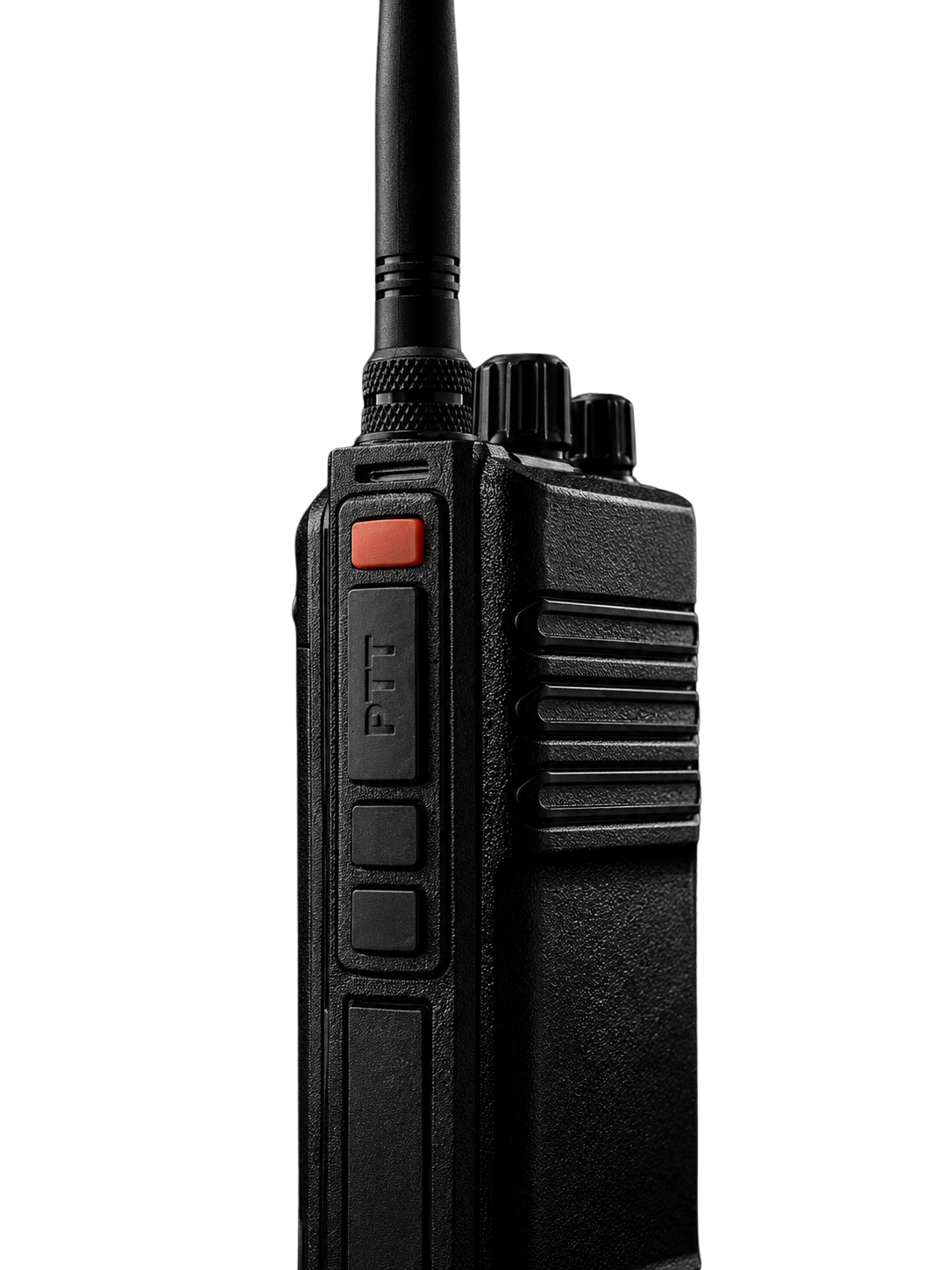
LINQRON B150
Coverage Layer
B15
Extended Coverage

30-level self-organizing relay for coverage across roadways, junctions and branches. No fixed infrastructure. Repositionable as the work face advances.

View B15 →
Visibility Layer
B15P
Command & Visibility

GPS and Beidou dual-mode positioning with 1.38" display. For supervisors and safety officers who need to know where every team member is in real time.

View B15P →
Planning information

What to confirm before deployment.

Mining communication planning starts with site type and certification requirements. The more clearly you can describe your environment, the faster we can recommend the right setup.

Mine type Coal, metal, non-metal or other underground operation - affects certification requirements and recommended devices
Country / region Certification standards vary by market - ATEX, IECEx, MA/KA, MSHA or local mine safety approvals if applicable
Hazardous conditions Gas, dust, methane risk or other explosive atmosphere classification, if applicable to your site
Roadway layout Main roadway length, number of branches, levels and active working faces
Team & operations Number of underground personnel, roles (miners, supervisors, inspection, rescue) and shift patterns
Existing system Current radios, repeaters, leaky feeder, dispatch platform or other communication infrastructure in use
Deployment review

Mining communication
starts with certification.

Tell us your mine type, country and required safety approval. We will help confirm the right communication setup.