
Contact Sales Get a Plan
Off-Grid Operations

Site radios that move
with the build.

Redeployable mesh radios for crews, cranes, basements and temporary offices without fixed repeaters or cable runs.

Network Self-organizing relay
Install No fixed repeater
Coverage Ground to upper floors
Best fit B15 + B17 + B15P
Why standard communication fails on construction sites
What changes every week
Distributed work zones
Ground crews, upper floors, equipment areas and temporary offices operate at the same time.
Different roles work in different zones simultaneously, and the distances between them grow as the project scales.
Structures change weekly
New walls, floors and steel frames change the radio path as the project develops.
A site that was open ground last month may now have concrete floors and rising walls blocking every signal path you planned for.
Moving equipment operators
Excavators, cranes, trucks and lifts need clear contact while constantly changing position.
Mobile equipment creates moving communication requirements that fixed infrastructure cannot follow.
Temporary site offices
Command points relocate as project phases change.
The site office that was at the entrance is now three zones away. Communication planning built around its original position no longer works.
Why fixed solutions can't keep up
Fixed repeaters
Need installation, power and antenna planning. When the site layout changes, the repeater stays where it was — not where you need it.
✕ Difficult to relocate as the site evolves
PoC / network radios
Depend on cellular or Wi-Fi coverage across the site. Signal can be unstable in active build zones, basement areas and sites far from urban coverage.
✕ Signal may be unstable in active build zones
High-power analog radios
Increasing power may add interference between teams on adjacent channels, without solving the underlying multi-zone coordination problem.
✕ Harder to manage across distributed teams

Construction sites don't wait
for infrastructure to catch up.
Neither should your radios.

Self-organizing relay means no fixed installation, no cable runs, no antenna planning. Power on, connect, redeploy when the site changes.

How it works

A network that moves
with the site.

Radios placed across active zones form a local network automatically. As the site develops, they can be repositioned in minutes — no reconfiguration required.

TEMP OFFICE GROUND FLOOR / STRUCTURE UPPER FLOORS (PHASE 2) EQUIPMENT ZONE MATERIAL / BASEMENT ↑ MOVING UP B15P Site mgr B15 Ground crew B15 Upper floor B17 Crane op. B15 Material ↺ Redeploy anytime No reconfiguration needed B15 — Flexible site coverage B17 — Analog-digital transition B15P — Site command & visibility
Self-organizing
Setup — power on and connect
No fixed repeater
Infrastructure required
Minutes
To redeploy as zones move
Any phase
Foundation to finishing
Recommended for construction sites

Flexible coverage first.
Upgrade and command where needed.

Primary Layer
B15
Flexible Site Coverage

Self-organizing relay for changing work zones, temporary offices and moving teams. No fixed infrastructure — place radios where your teams are, and move them when the site changes.
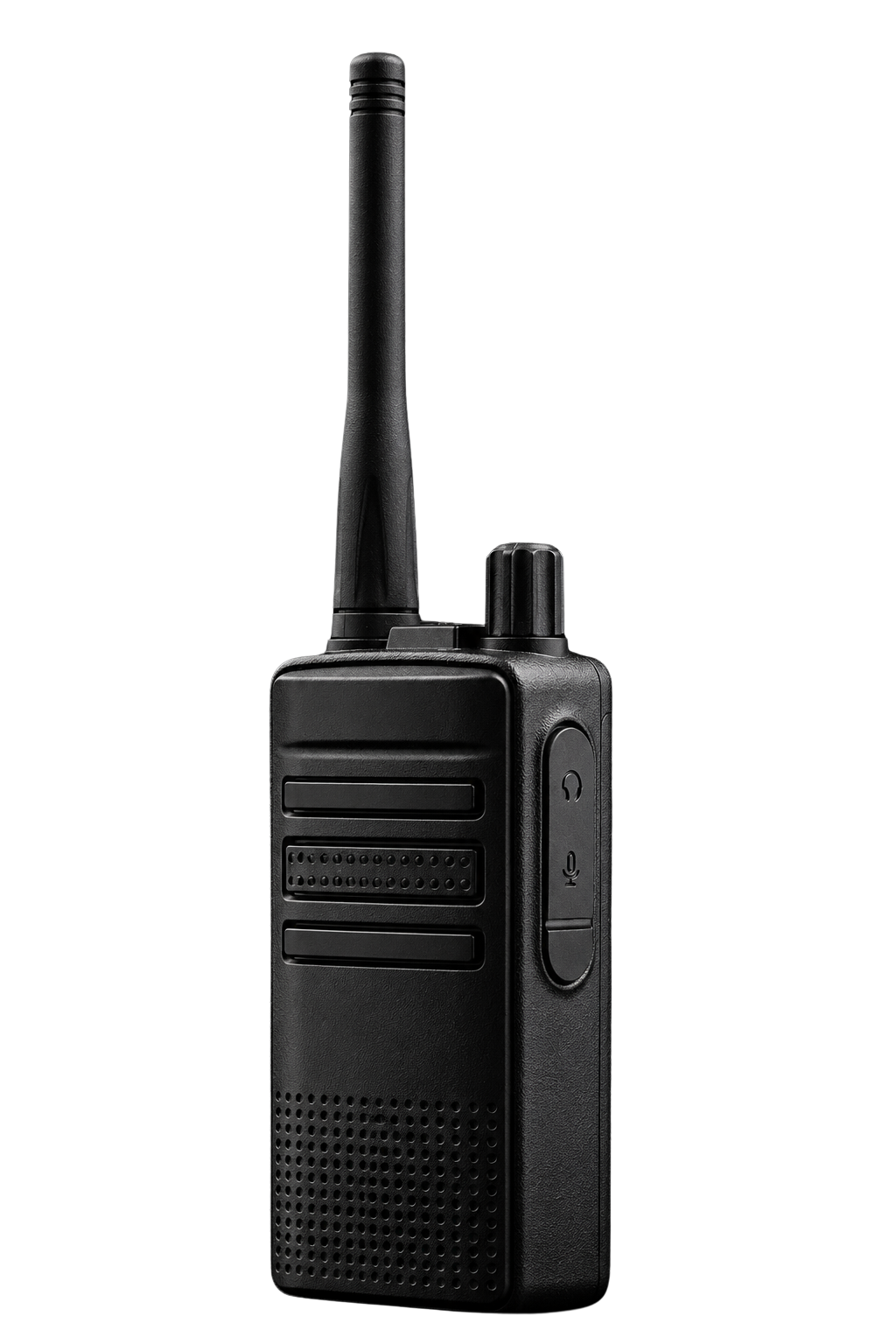
Redeployable as the project develops
View B15 →
LINQRON B15
Upgrade Layer
B17
Hybrid Fleet Transition

For contractors who already use analog radios across their fleet. B17's digital-analog dual-mode keeps existing devices working while introducing digital communication — without a full replacement.

View B17 →
Command Layer
B15P
Site Visibility

For supervisors and safety teams who need on-device status and location-aware coordination. B15P adds GPS positioning and a 1.38" display — visibility where it's supported by site conditions.

View B15P →
Planning information

Tell us about your project
and current phase.

Construction communication needs change from phase to phase. The more detail you share, the faster we can recommend a setup that moves with the site.

Project type & phase Residential, commercial, infrastructure or industrial; foundation, structure, fit-out or finishing phase — communication needs change at each stage
Site size & layout Ground area, number of floors, basement levels and temporary office locations
Active work zones Main active areas and the distance between ground crews, upper floor teams, supervisors and equipment operators
Moving equipment Cranes, excavators, lifts, trucks or other mobile operators that need direct communication while moving
Existing radios Current analog or digital radios, channels and compatibility requirements — relevant if a phased transition is preferred
Team size Number of users across contractors, supervisors, safety teams, equipment operators and site management
Get Started

Your site changes.
Your communication plan should too.

Tell us your project type, current phase and active work zones — we'll recommend a setup that can move with the site.