
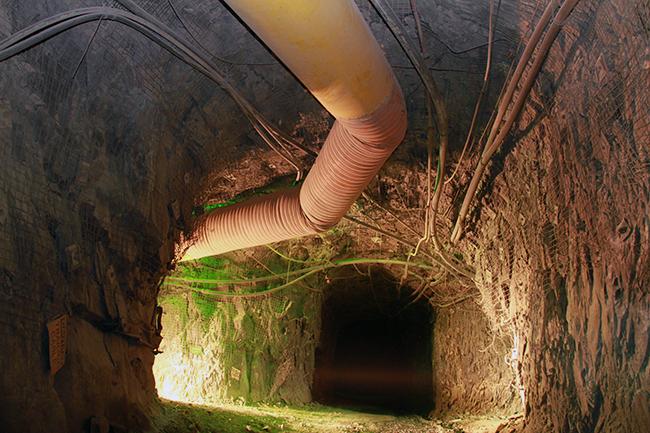
Signal-challenging Environment
Tunnels, underground corridors and enclosed spaces often create weak-signal or no-signal communication zones.
A rapid-deployment communication coverage system designed for tunnels, underground spaces and other signal-challenging environments.
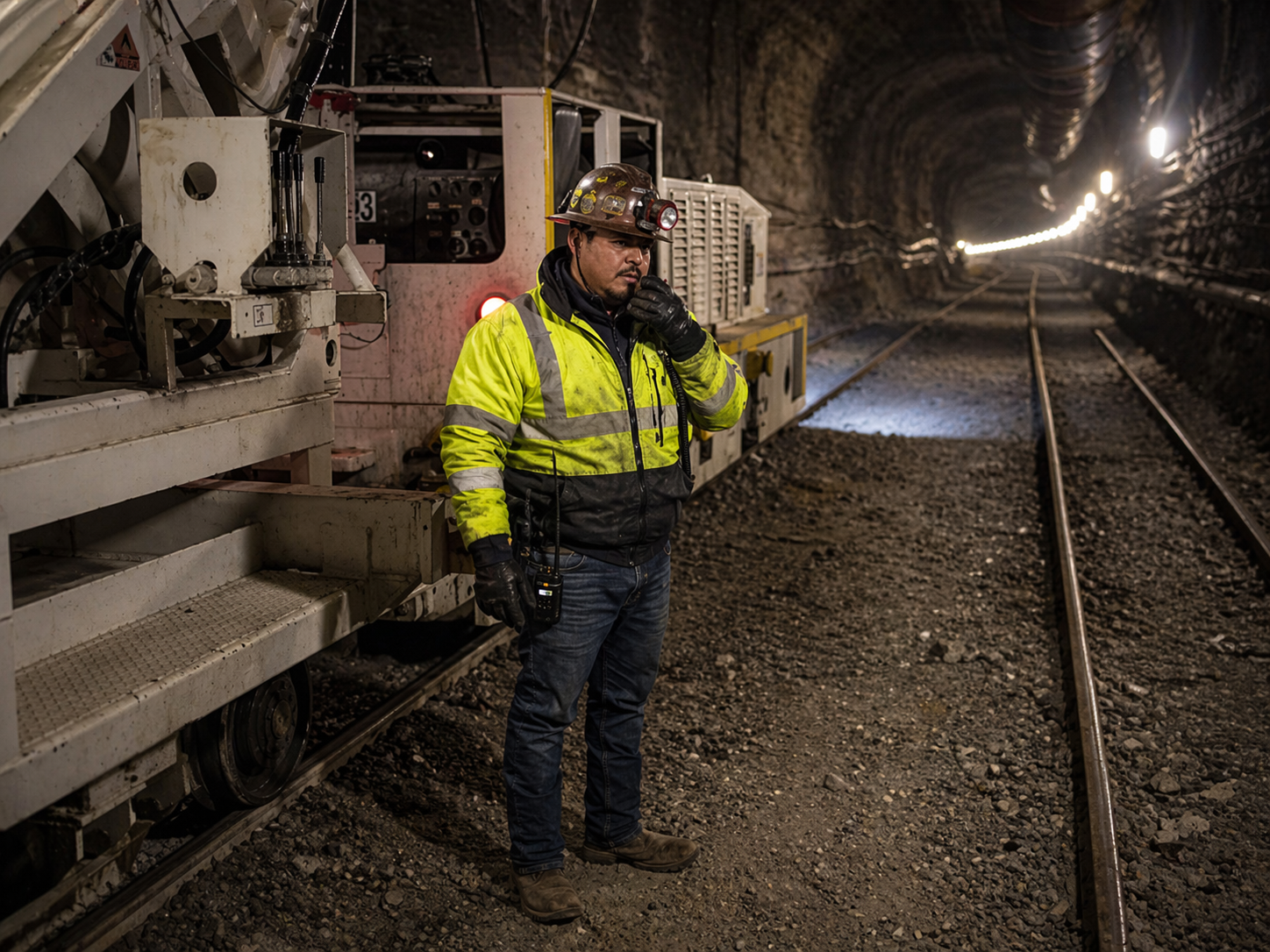
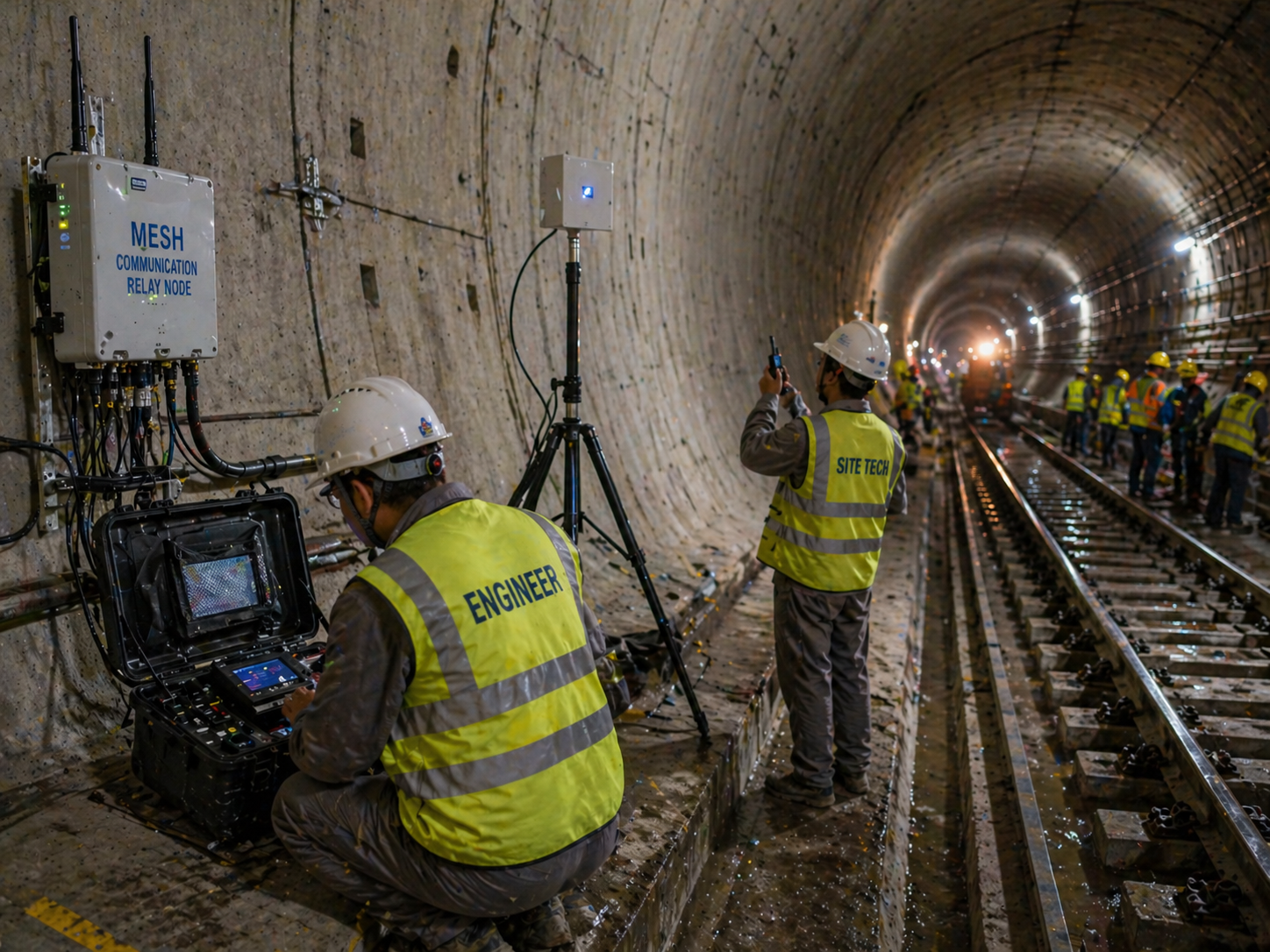
Tunnel and underground environments often include long corridors, enclosed structures, curved spaces and heavy shielding. These conditions can weaken public network signals and make normal communication unreliable.
The system was designed to provide rapid communication coverage through wireless self-organizing base stations, same-frequency networking and multi-hop relay, helping teams maintain voice coordination in underground operations.
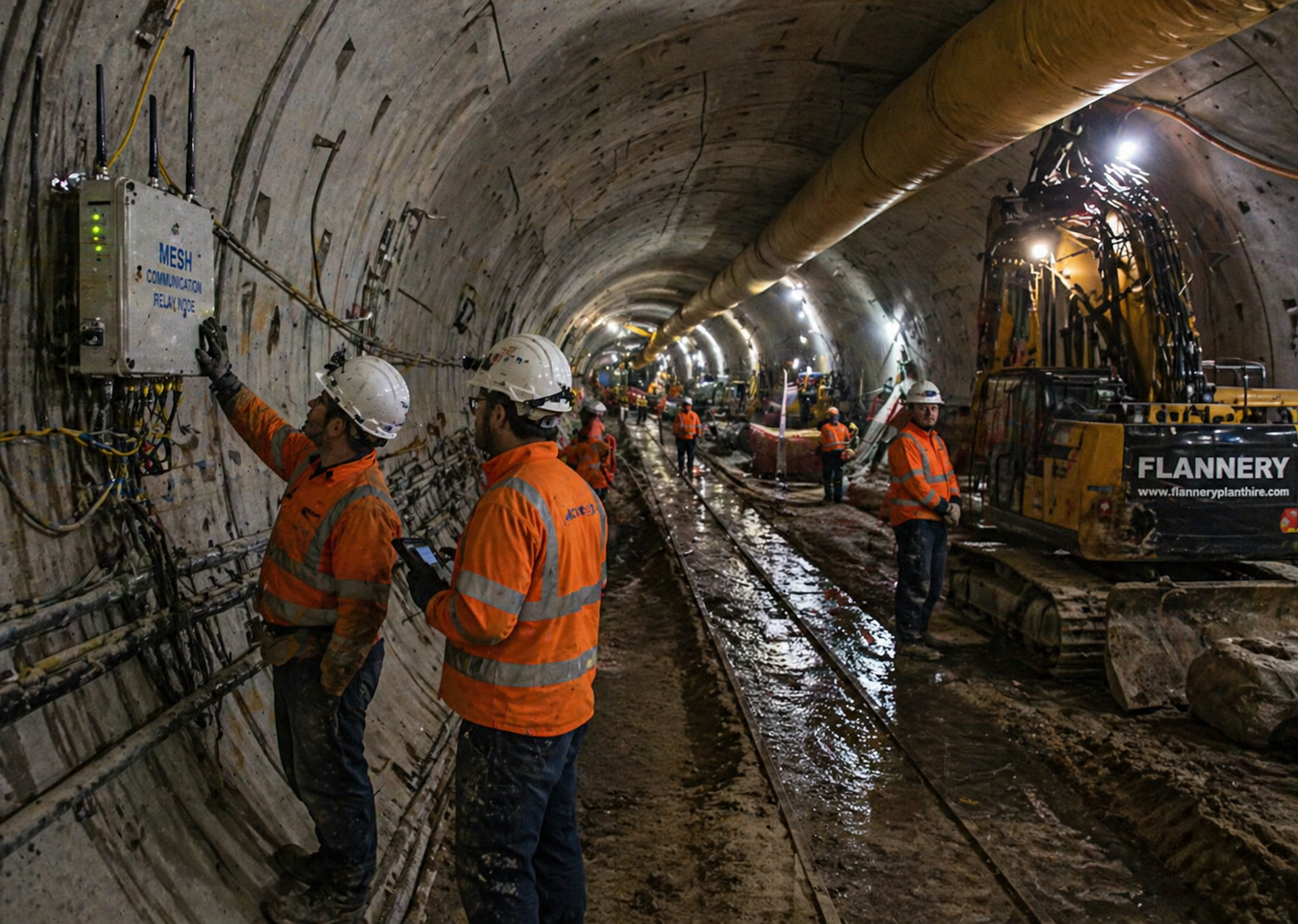
This deployment supports communication continuity in enclosed underground scenarios where ordinary signal coverage may be weak or unavailable.
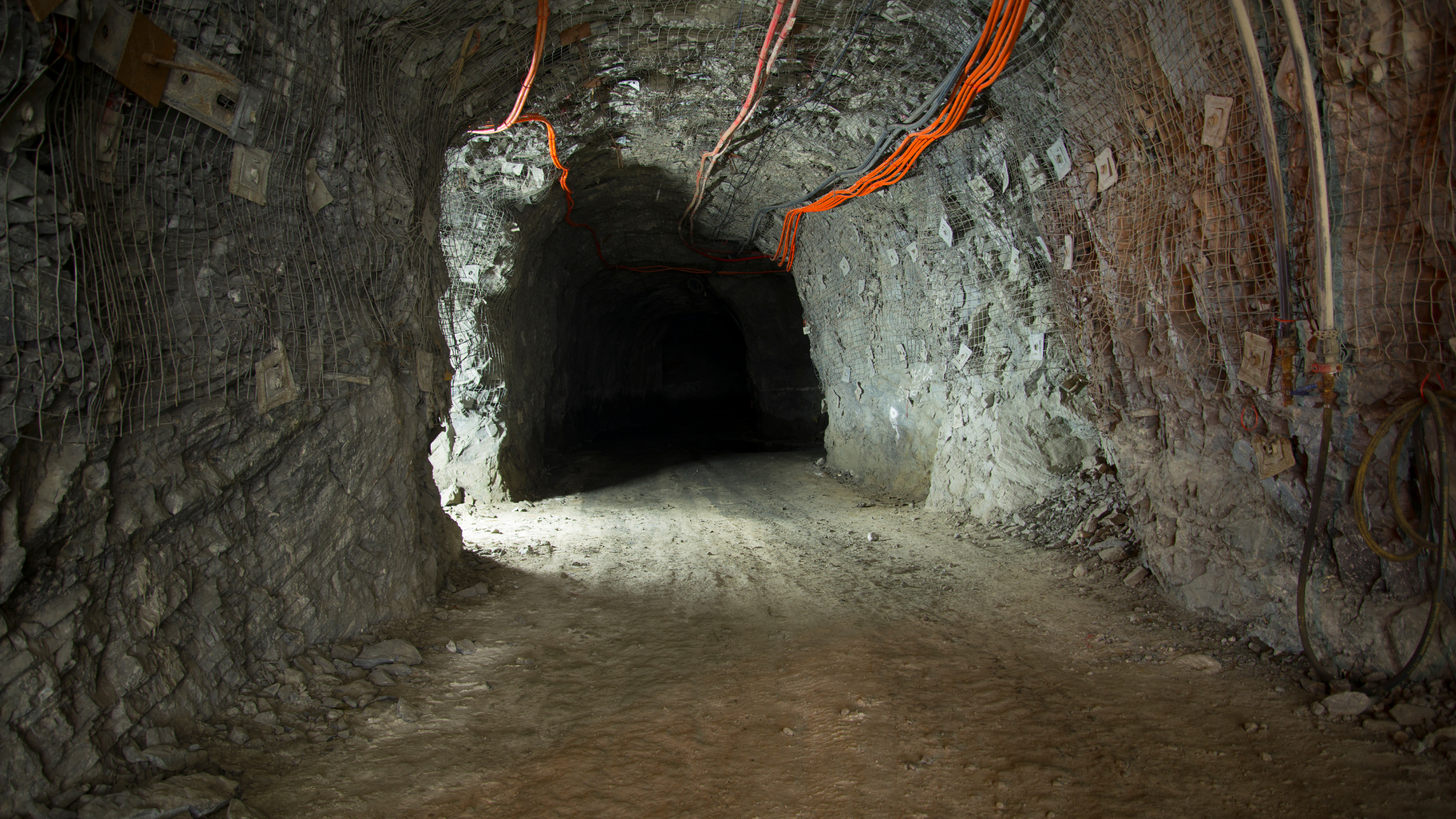
Underground spaces and tunnel structures can block or weaken signals, creating blind spots that affect construction teams, patrol users, rescue teams and command-side coordination.
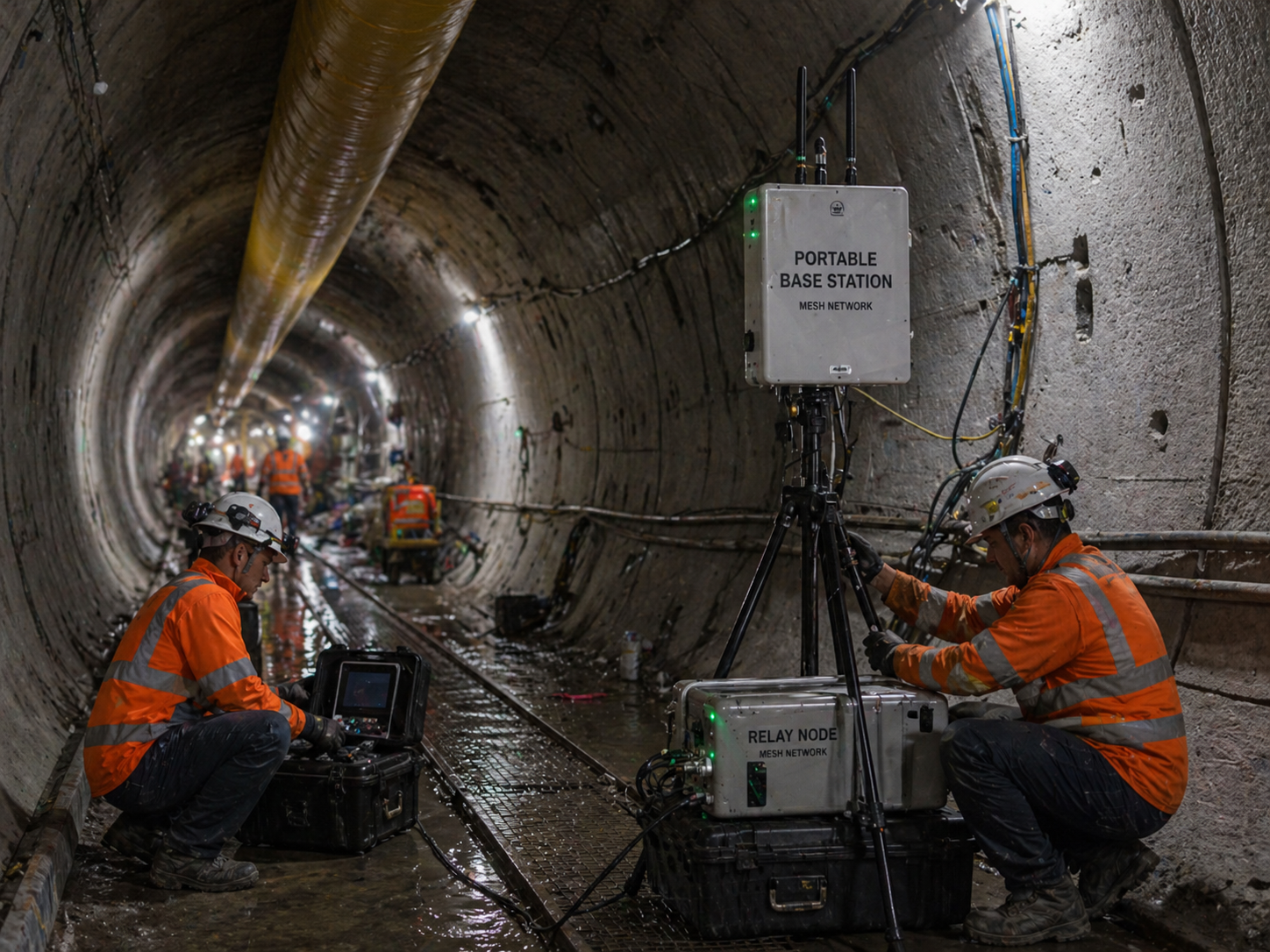
Wireless self-organizing base stations and same-frequency networking can be deployed quickly to create multi-hop relay links and extend voice communication into difficult coverage areas within a construction site communication solution.
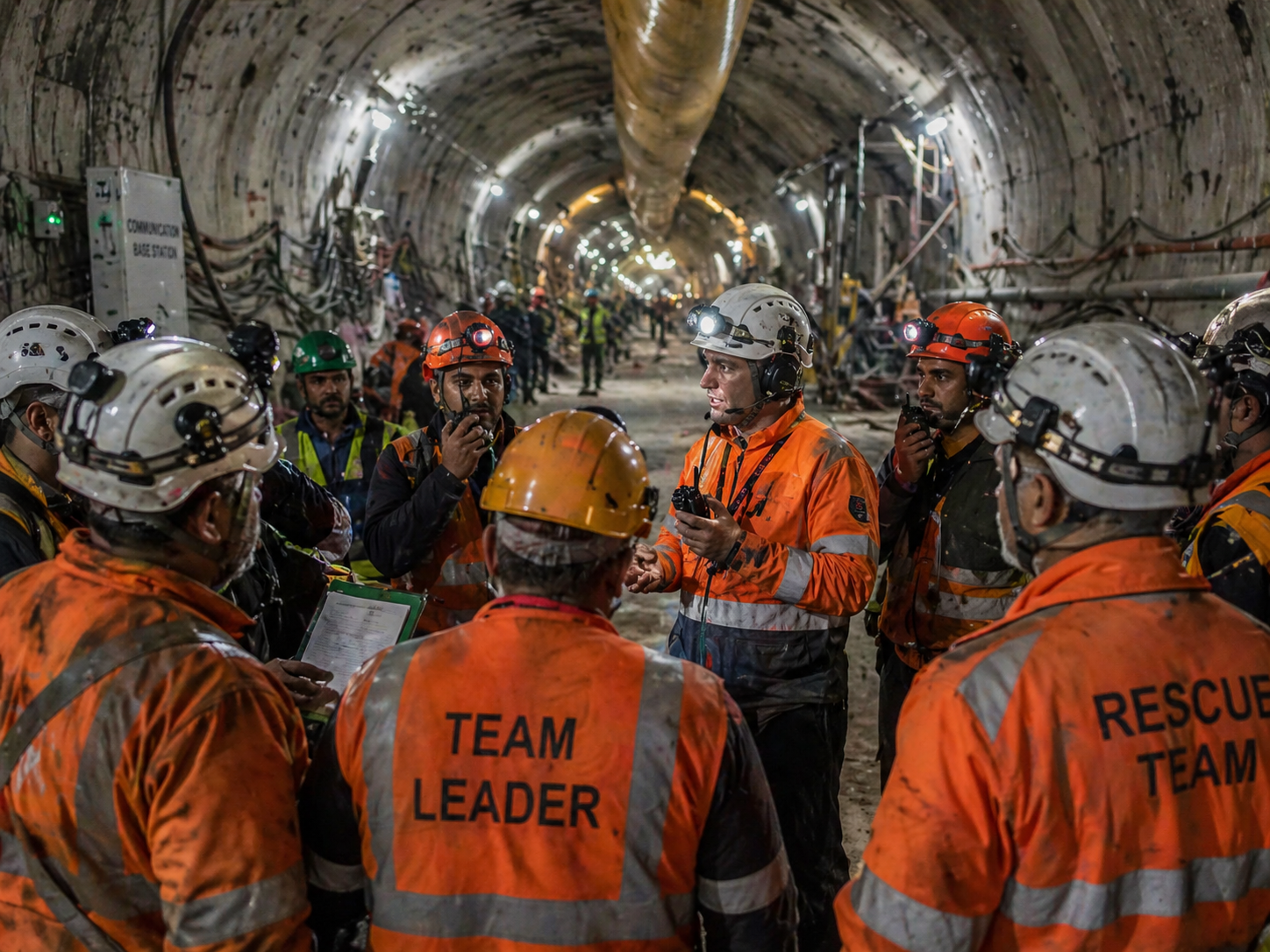
Field teams can maintain more stable communication during underground work, helping improve coordination, emergency response and operational safety in signal-challenging locations.
The system combines self-organizing base stations, relay coverage, handheld terminals and command-side coordination into one underground communication workflow.
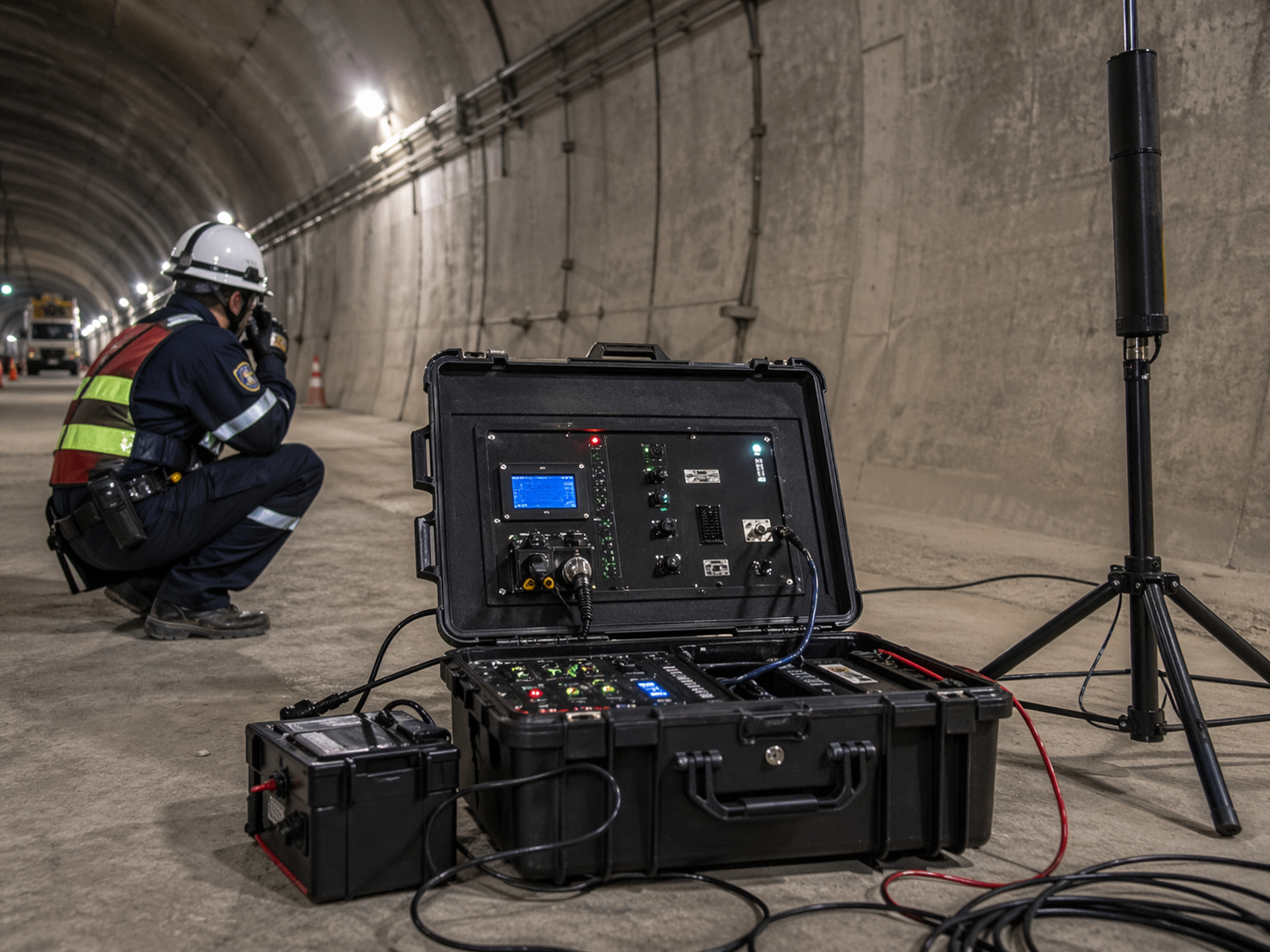
Rapid-deployment nodes used to create wireless communication coverage inside tunnels and underground areas.
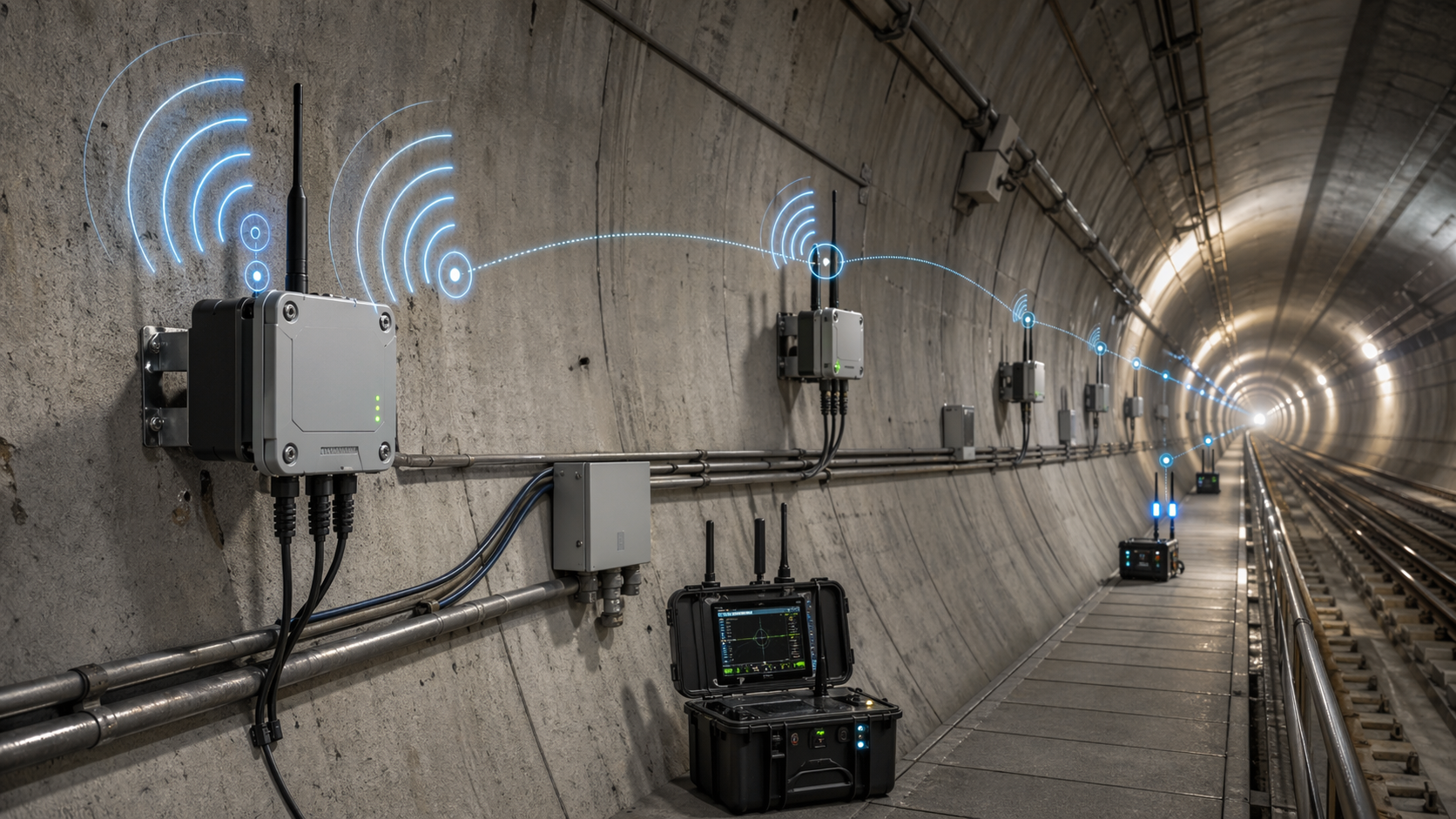
Same-frequency networking and relay capability help extend communication through long or curved underground routes.
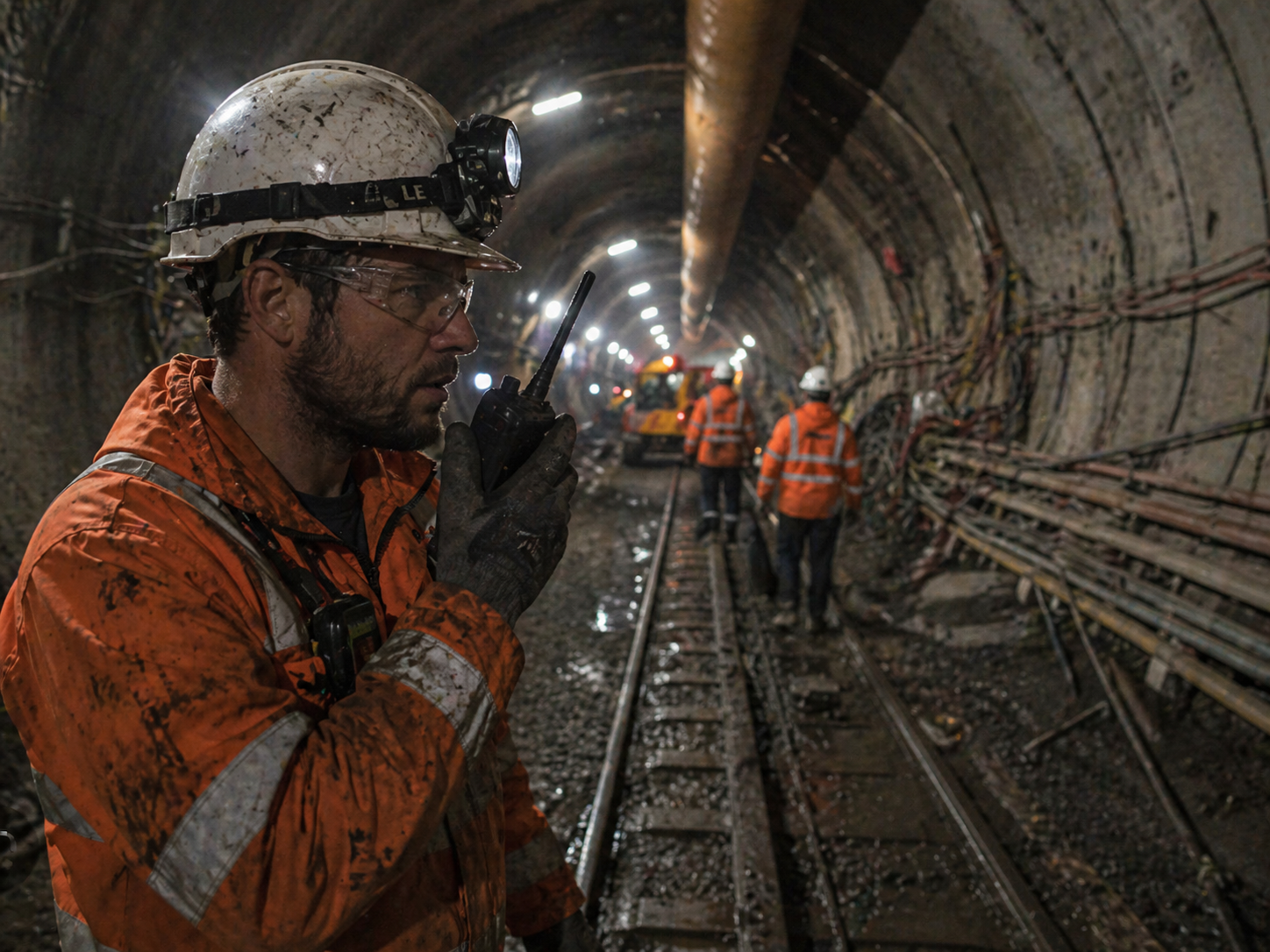
Field-side terminals including N-DMR dual-mode radio, dual-mode PoC radio and rugged 4G PoC radio options support voice coordination for underground workers, patrol users and rescue personnel.
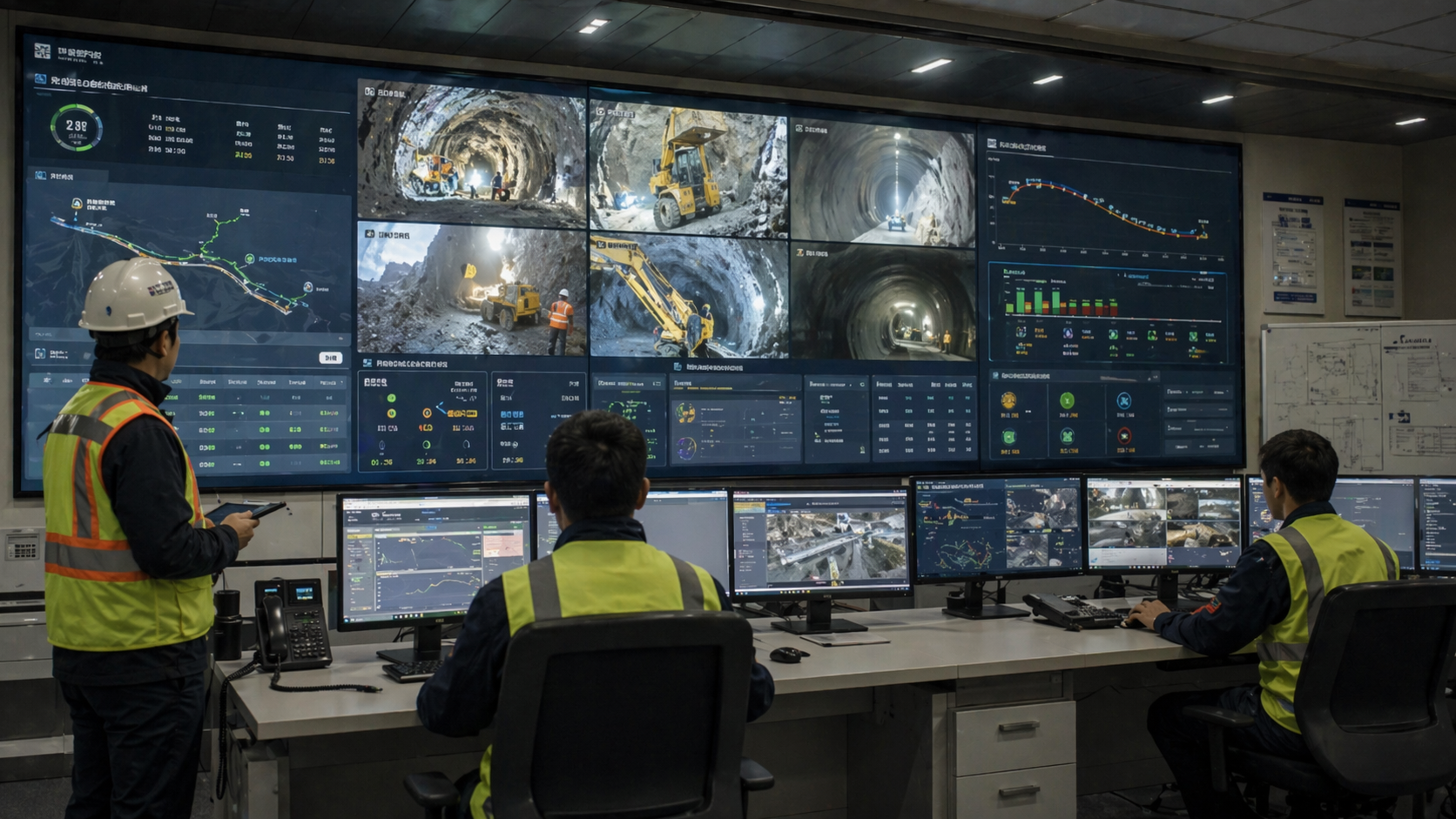
Connects underground users with supervisors or command-side teams for operational coordination and emergency response.
The value of this case lies in rapid setup, underground signal extension, self-organizing relay and safer communication for enclosed-space operations.
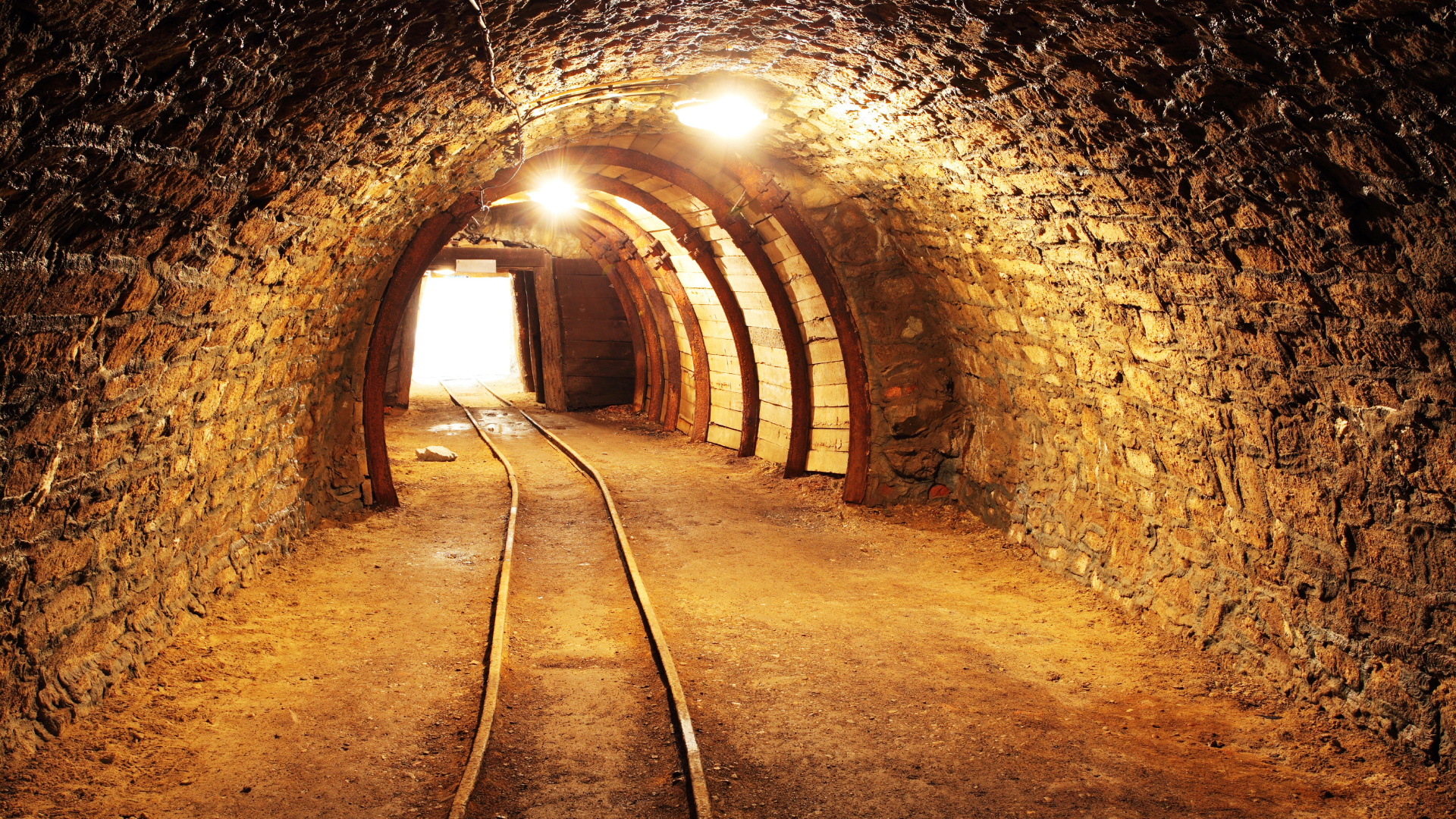
Supports communication coverage in tunnels, underground corridors, construction areas and enclosed service spaces.
Wireless nodes can be deployed quickly where fixed infrastructure is unavailable or difficult to install.
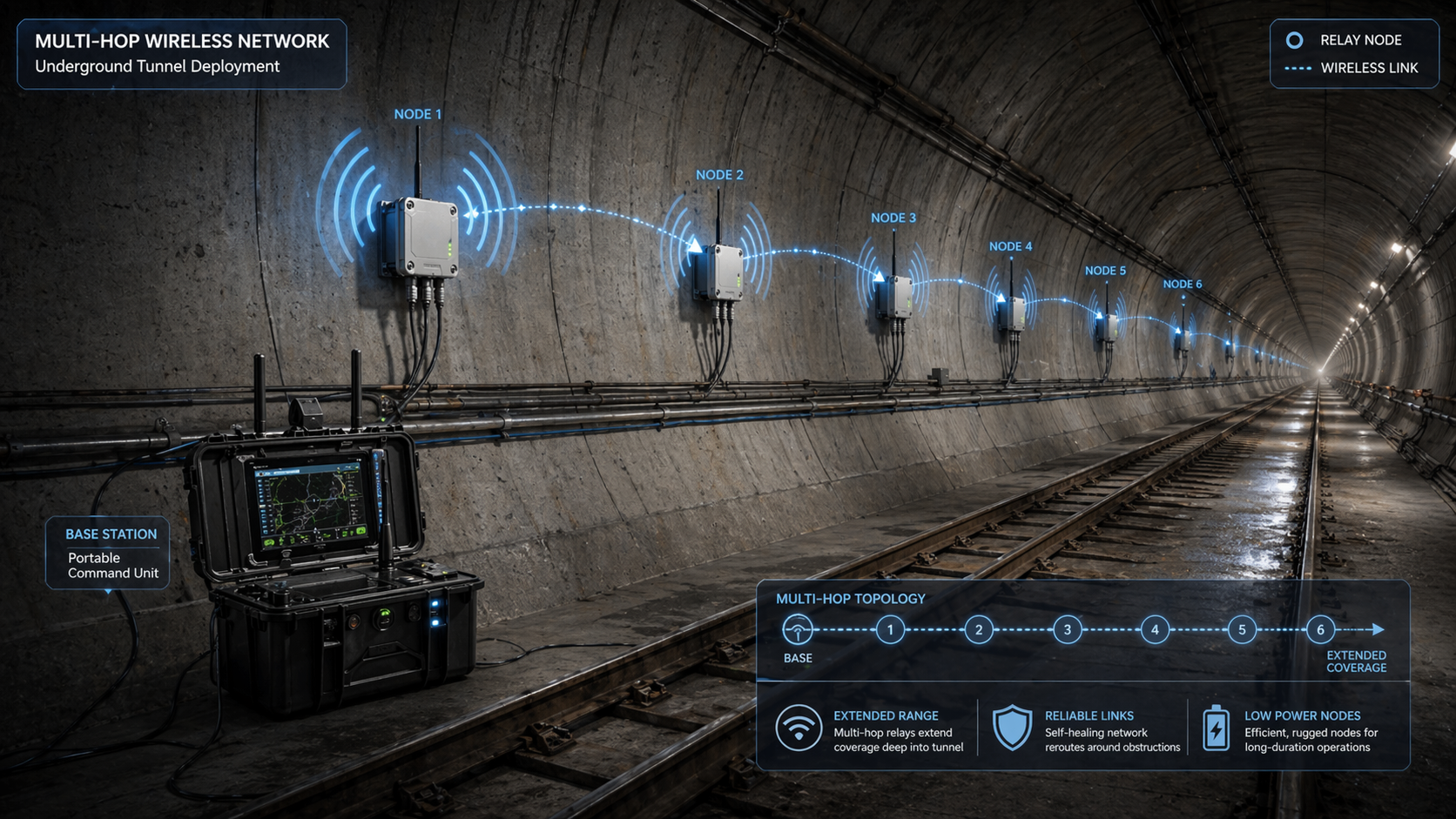
Relay networking extends communication through long tunnels and areas where direct signal paths are limited.
Same-frequency networking supports smoother voice communication and relay between underground coverage nodes.
Coverage planning helps reduce no-signal zones caused by terrain, structure shielding and underground layouts.
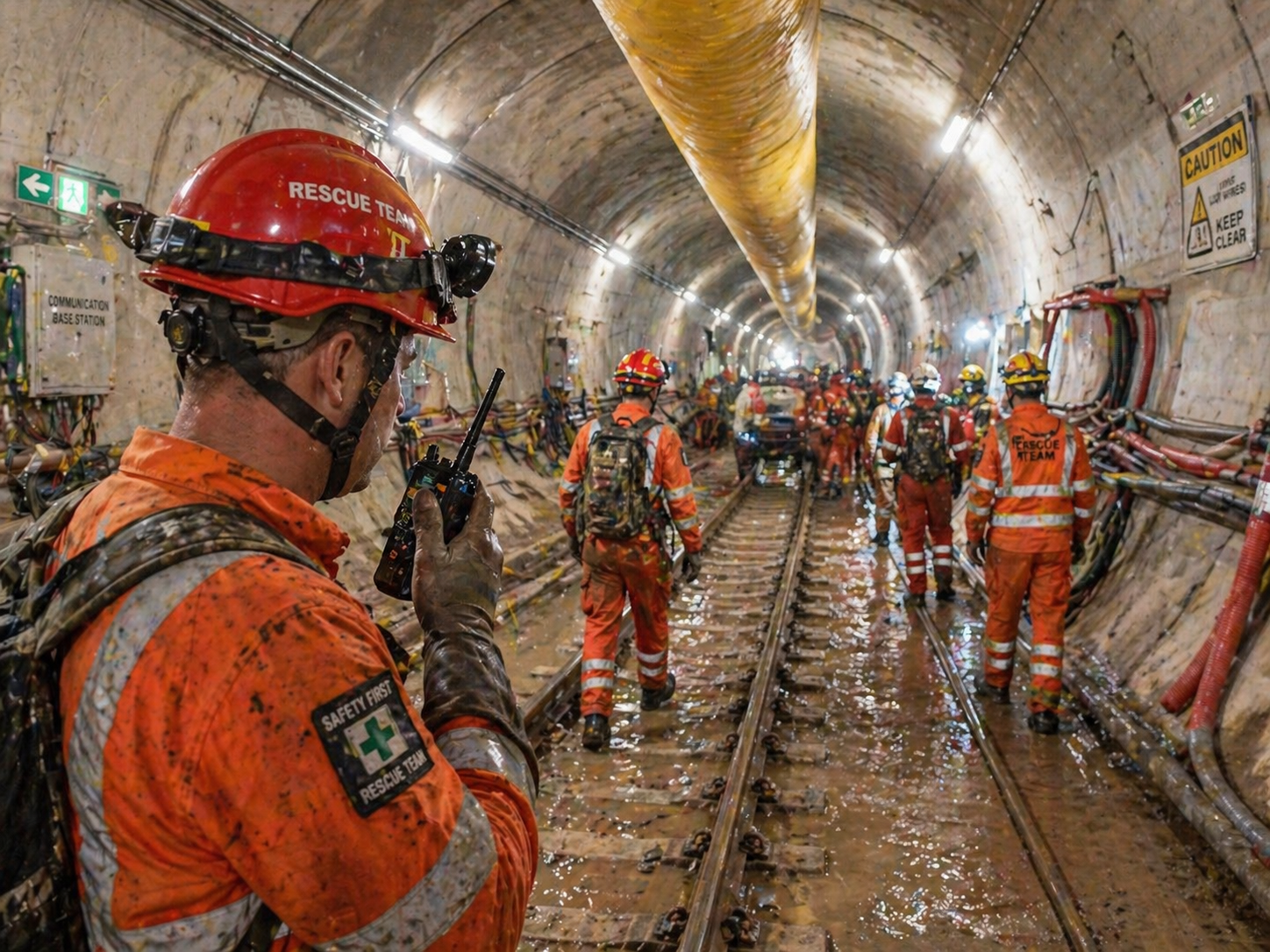
Improves coordination for inspection, maintenance, rescue and emergency handling in underground environments.
The system links underground workers, self-organizing relay nodes and command-side users into one deployable communication coverage workflow.
These representative points show how the deployment supports underground communication, rapid relay setup and safer field coordination.
| Module | Representative Feature | Public-facing Description |
|---|---|---|
| Self-organizing Base Station | Rapid wireless deployment | Creates communication coverage without relying on extensive fixed infrastructure. |
| Relay Network | Multi-hop relay | Extends communication deeper into tunnels and underground spaces through relay nodes. |
| Network Mode | Same-frequency networking | Supports smoother underground voice communication and flexible relay extension. |
| Handheld Terminal | Field voice communication | Supports underground worker coordination, inspection communication and emergency response linkage. |
| Coverage Planning | Blind-spot reduction | Helps reduce communication gaps caused by enclosed space, long tunnel routes and structural shielding. |
| Emergency Operation | Command-side linkage | Connects field teams with supervisors or command-side roles during underground operations. |
If your project involves tunnels, underground construction, enclosed facilities, inspection routes or emergency rescue communication, we can help match a suitable coverage structure.
Continue browsing related pages, or go directly to the inquiry page to discuss your project.