
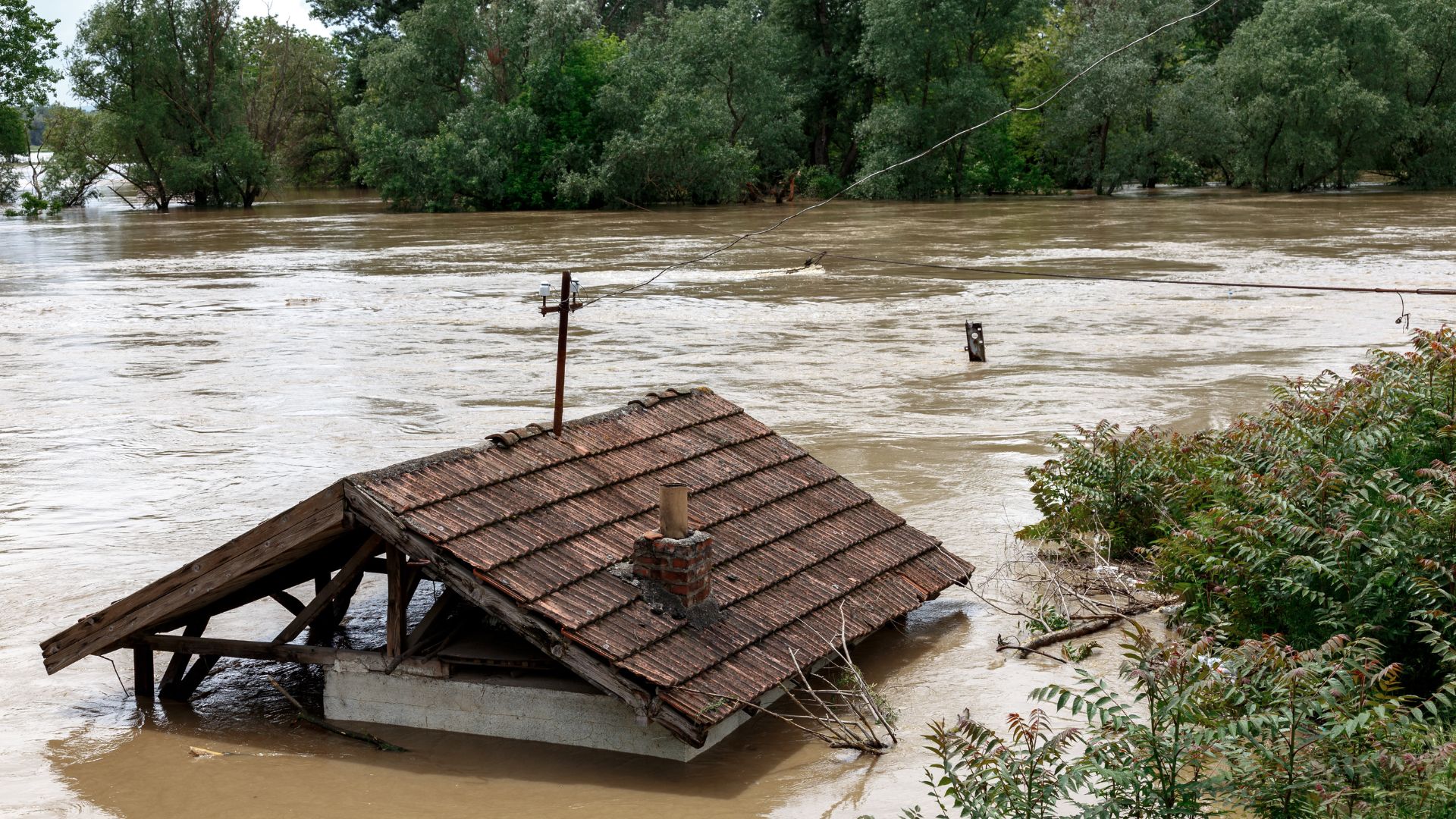
Field Patrol Environment
Riverbank inspection, flood-prevention patrol and long-distance field coordination under emergency conditions.
Maintained emergency communication continuity across flood-control operations under network outage and power outage conditions.
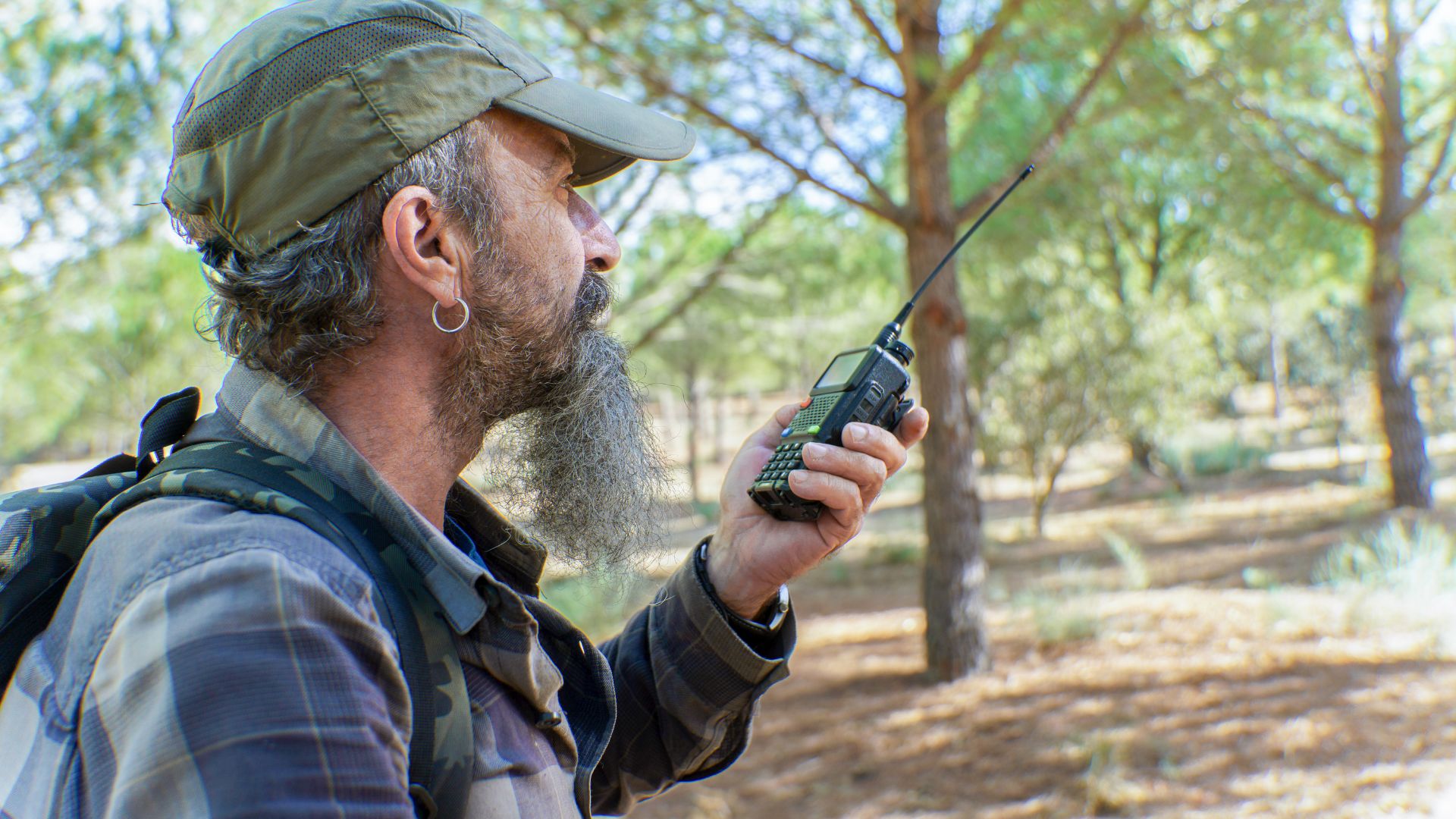
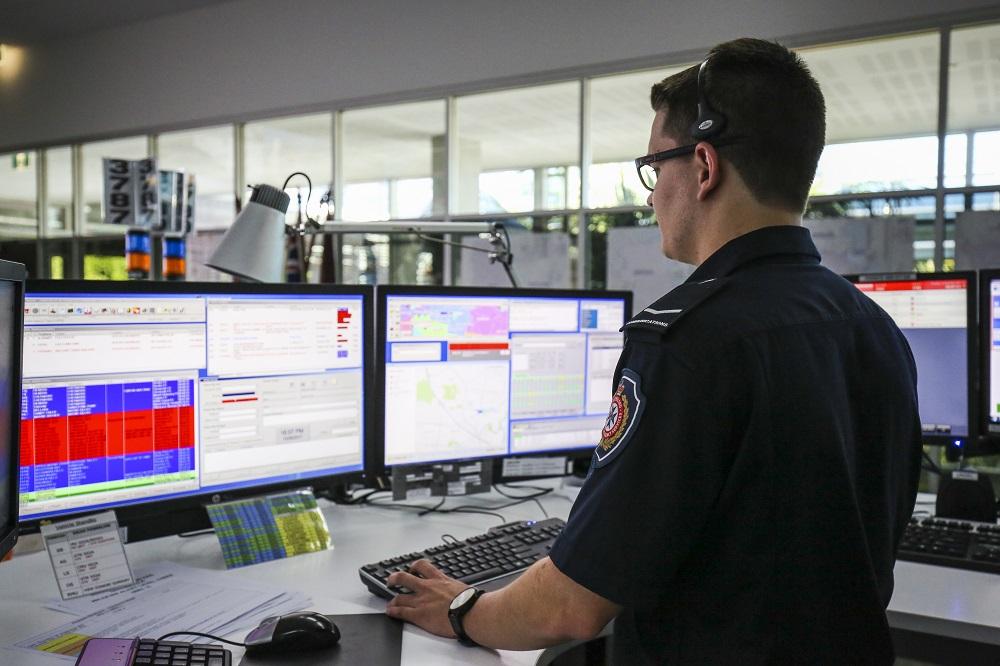
After the extreme rainfall event in Zhengzhou on July 20, large-scale communication interruption exposed the risk of relying only on public network infrastructure during disaster response. Base stations went offline, communication links were lost and coordination became significantly more difficult in emergency conditions.
The project was proposed to strengthen minimum-guaranteed communication capability for Yellow River flood control under extreme weather, power outage and network outage scenarios. The core objective was to keep command transmission, field coordination and emergency communication available when ordinary communication channels fail.

This project was built around the need to preserve communication continuity when severe weather and disaster conditions make conventional networks unreliable.

Flood control operations across large riverbank sections require one communication structure for field teams, forward command and rear command. Under severe weather, public network dependence creates risk of interruption, slower emergency response and reduced coordination efficiency.
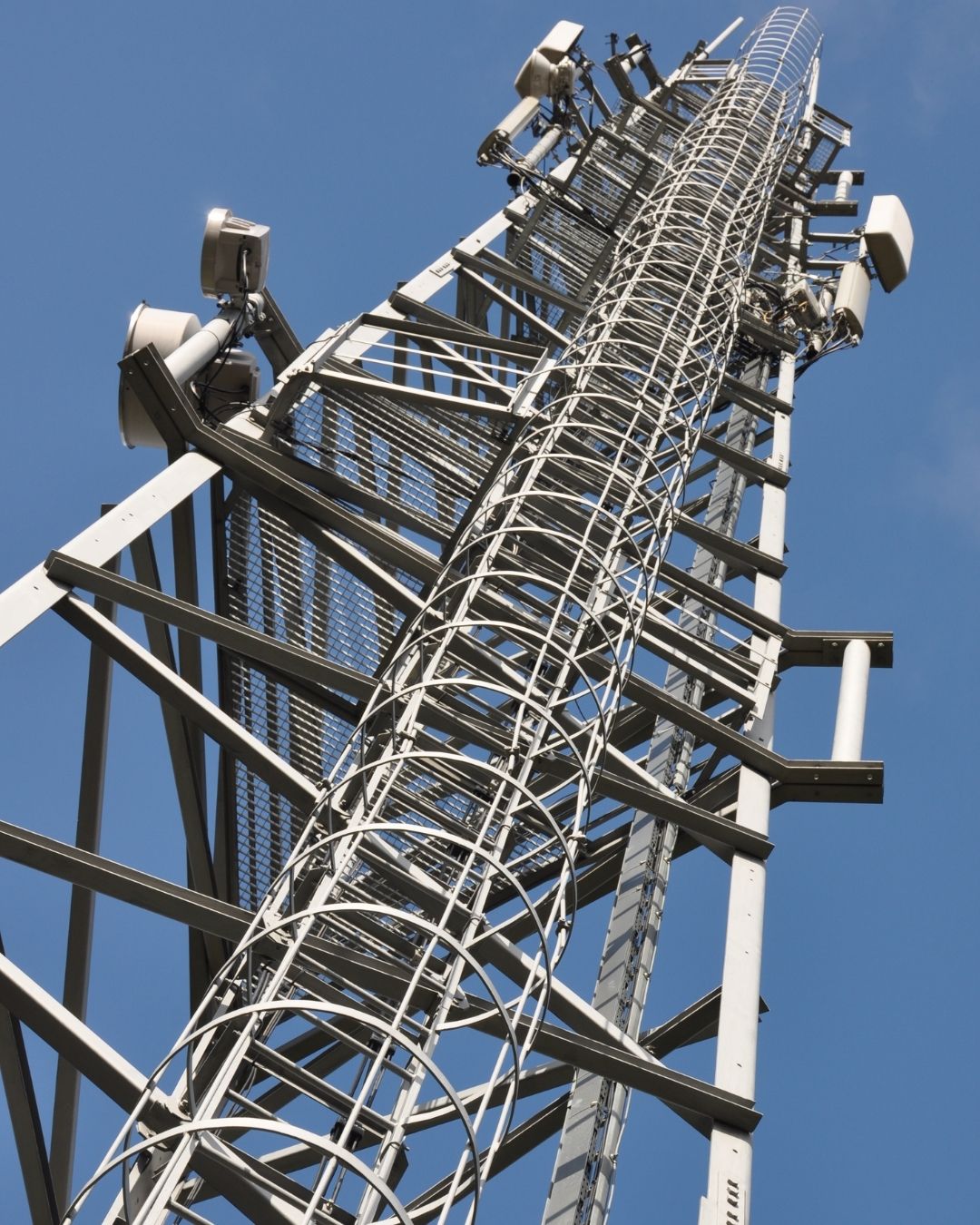
The deployment combines wireless self-organizing voice networking, solar-powered emergency base stations, handheld and multi-mode terminals, plus a unified dispatch command platform to keep communication and coordination functioning during outage conditions.
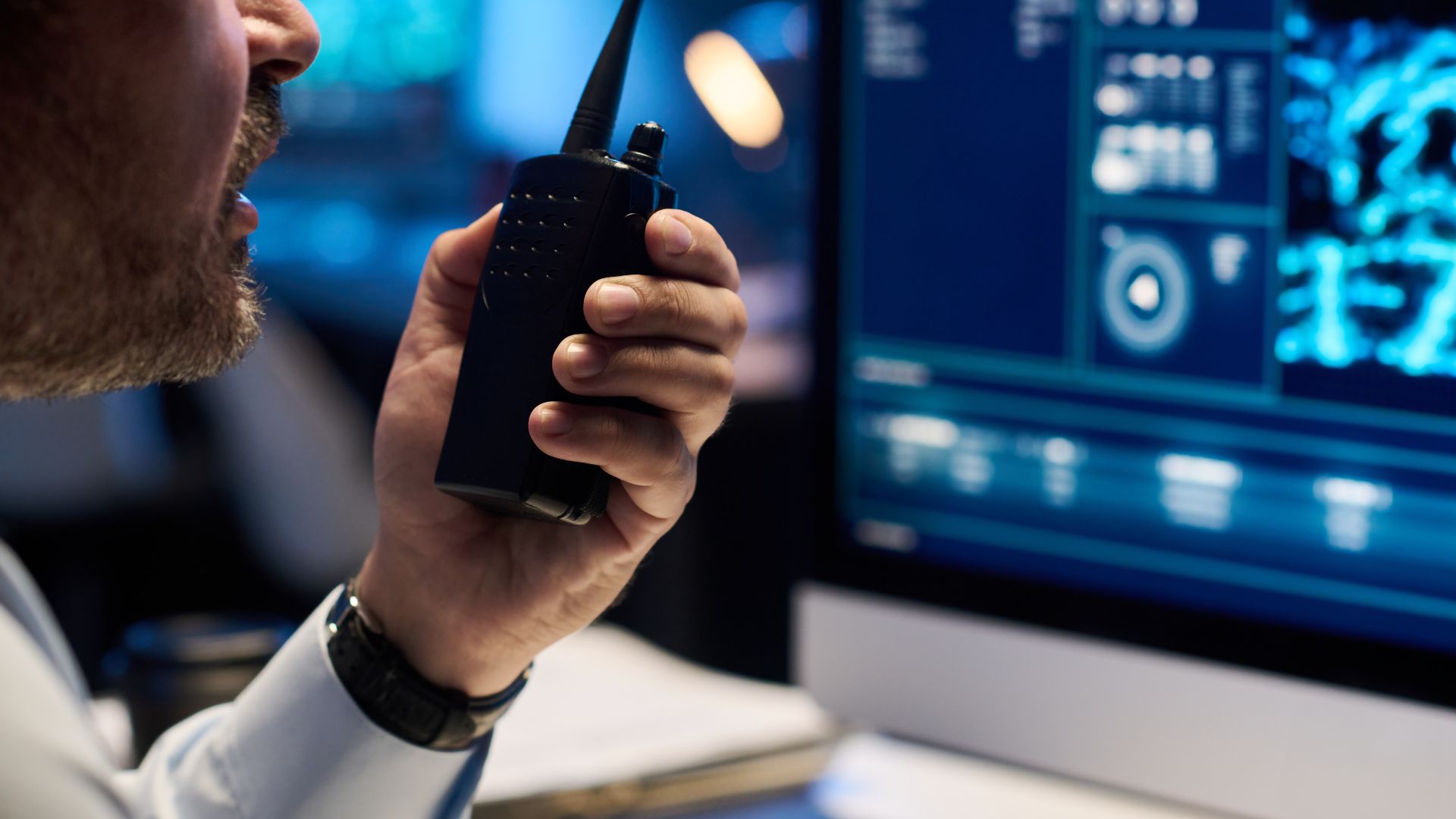
The project created a more resilient command communication structure for flood-control response, improving emergency linkage, field coordination continuity and dispatch-side visibility when ordinary communication infrastructure becomes unstable.
The project combines fixed coverage, field terminals and platform-side control into one coordinated emergency communication structure.
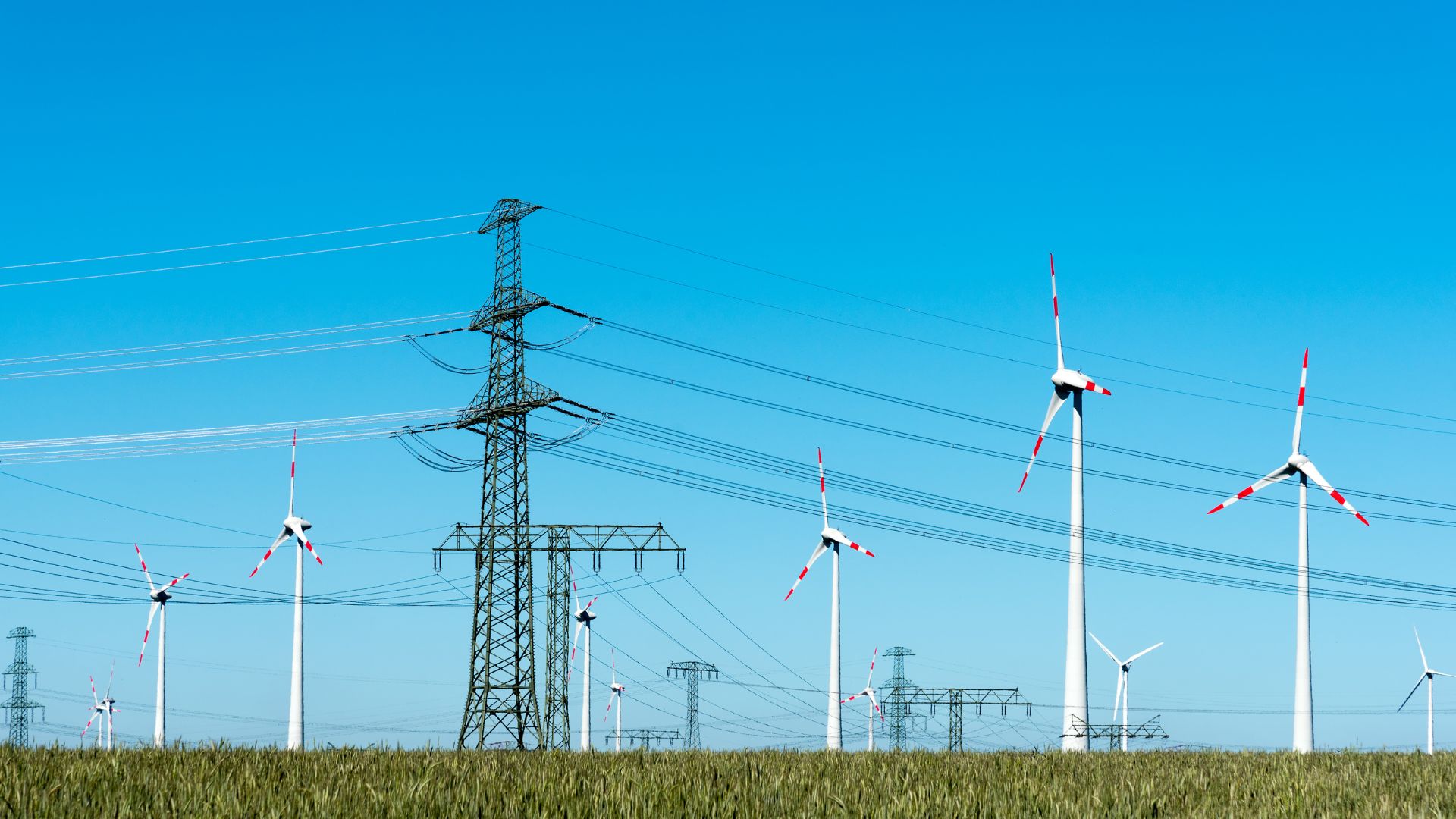
Wireless-grouped base stations used for voice communication, data relay, signal extension and blind-zone coverage along the riverbank.
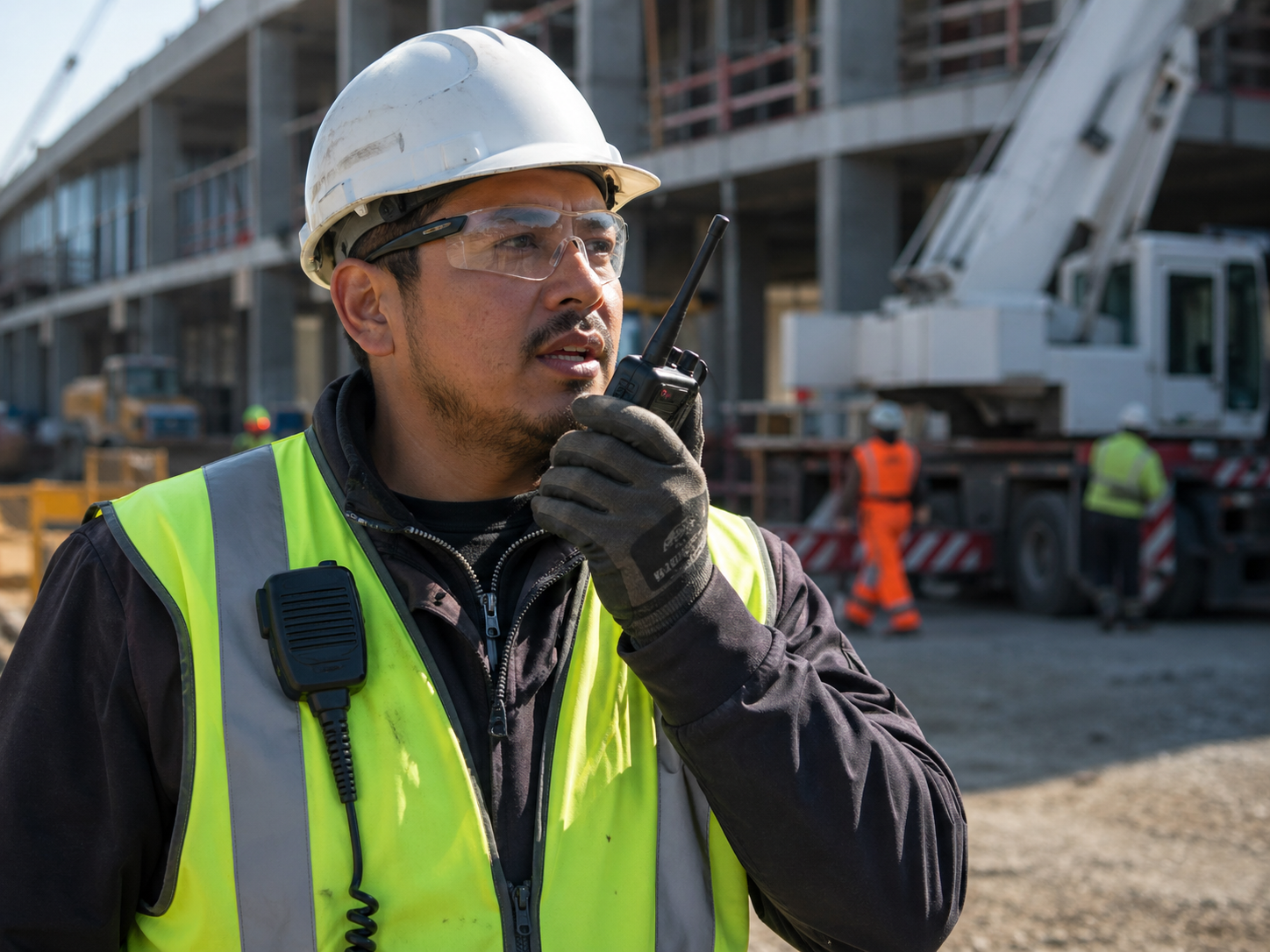
Field communication terminals for patrol personnel working inside the voice coverage area, supporting direct coordination and rapid deployment.
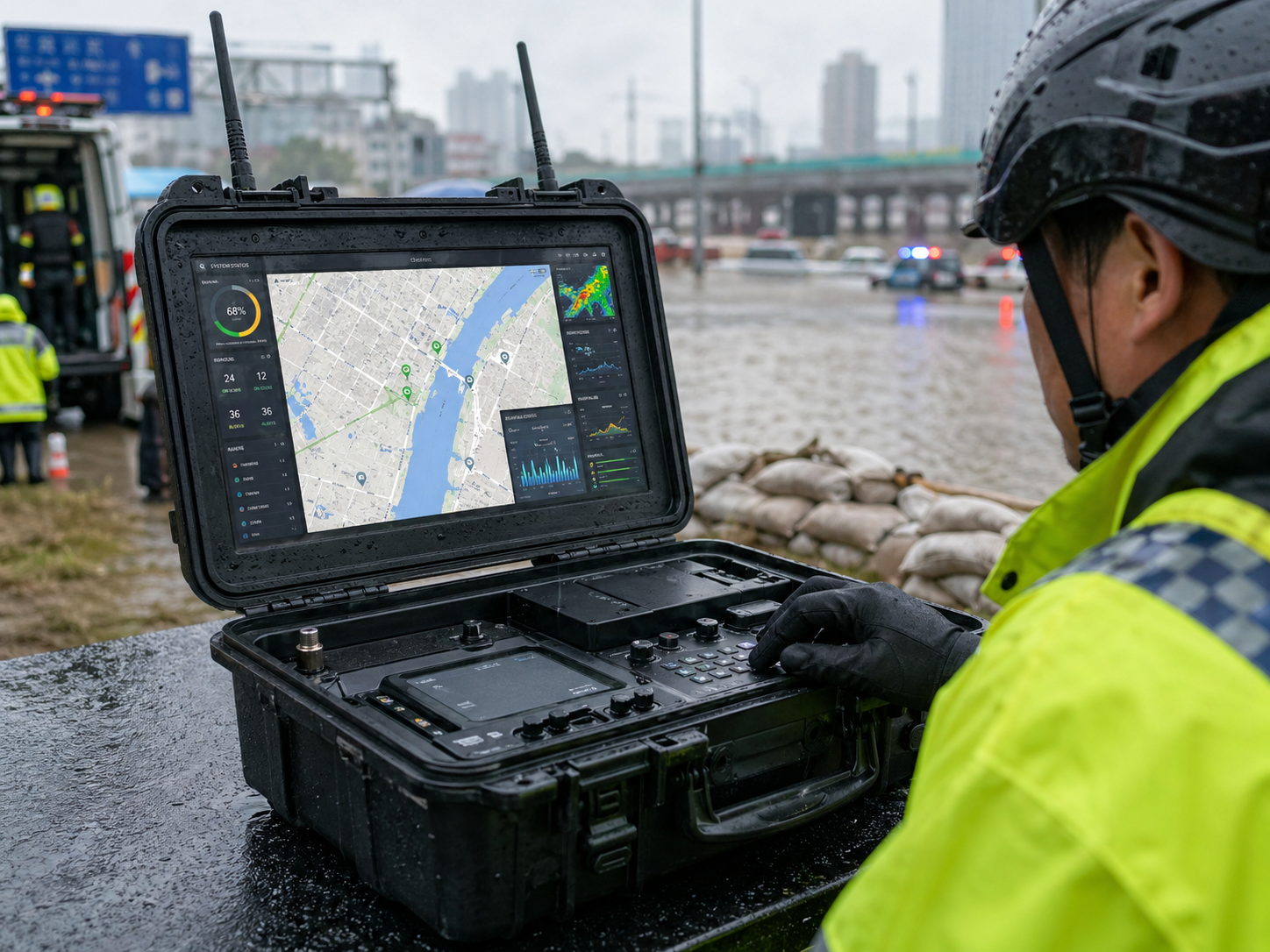
Portable terminals combining self-organizing voice networking with public network interconnection, SOS and positioning support.
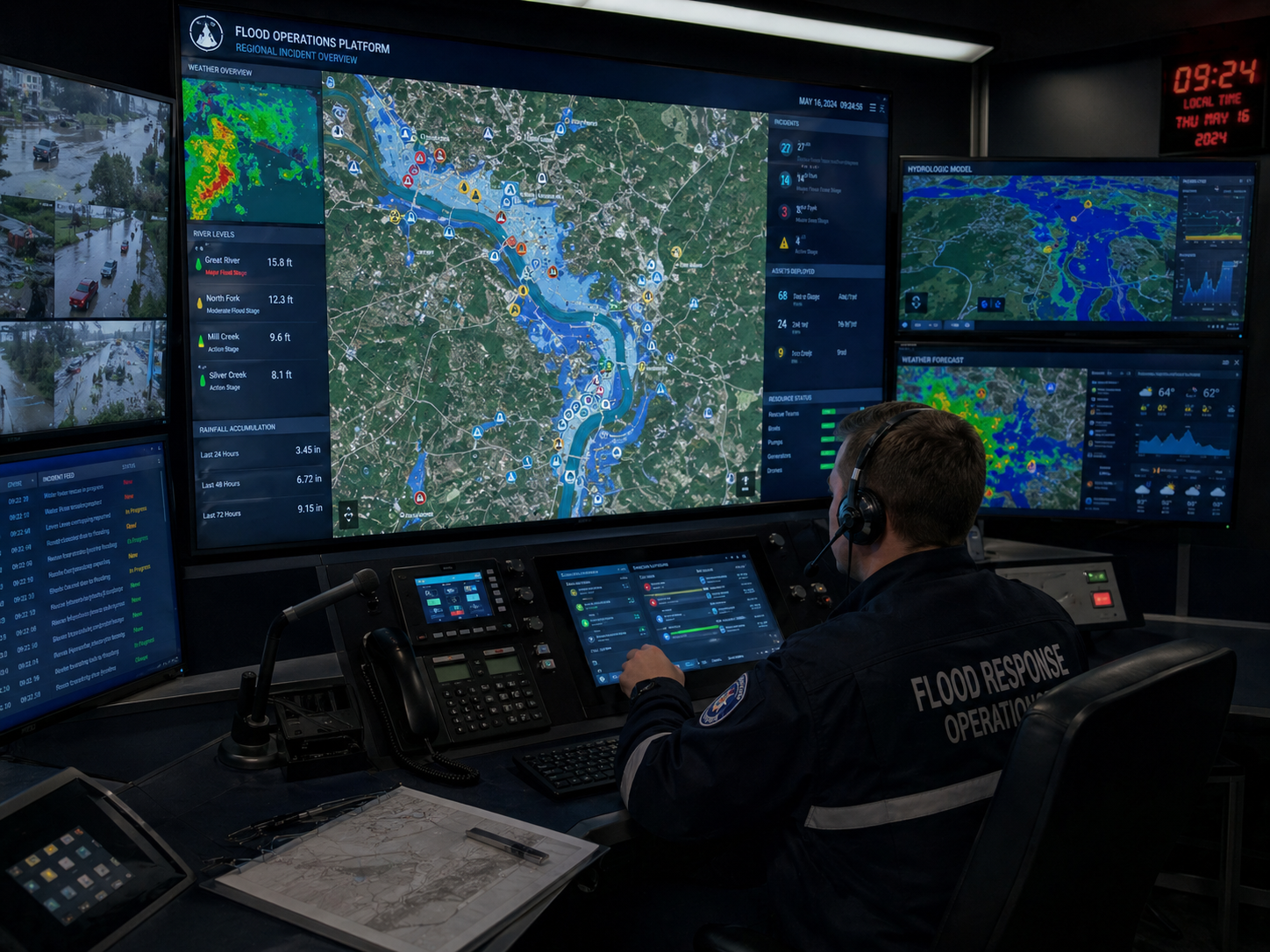
Command-side platform for call management, monitoring, location services, visual dispatch, group communication and recording retrieval.
This project stands out because it combines anti-disaster communication logic, long-distance deployment planning and command visibility in one system.
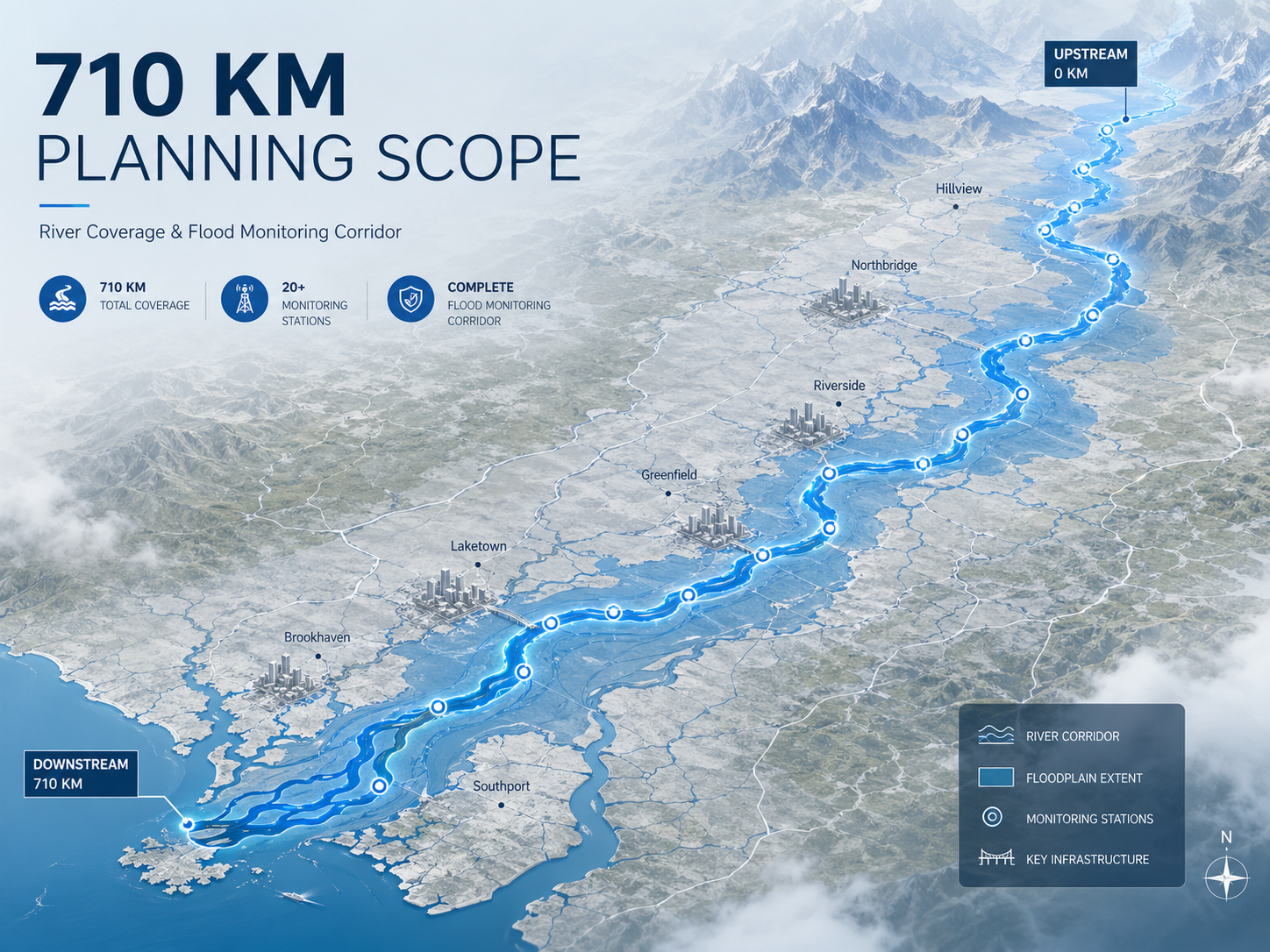
Base station placement was planned along the Henan Yellow River section with approximately 710 km of coverage scope.
The proposal planned one solar-powered emergency communication base station every 10 km for wider riverbank coverage continuity.
Each base station includes solar power and battery support, designed to maintain operation for no less than 15 days in cloudy conditions.
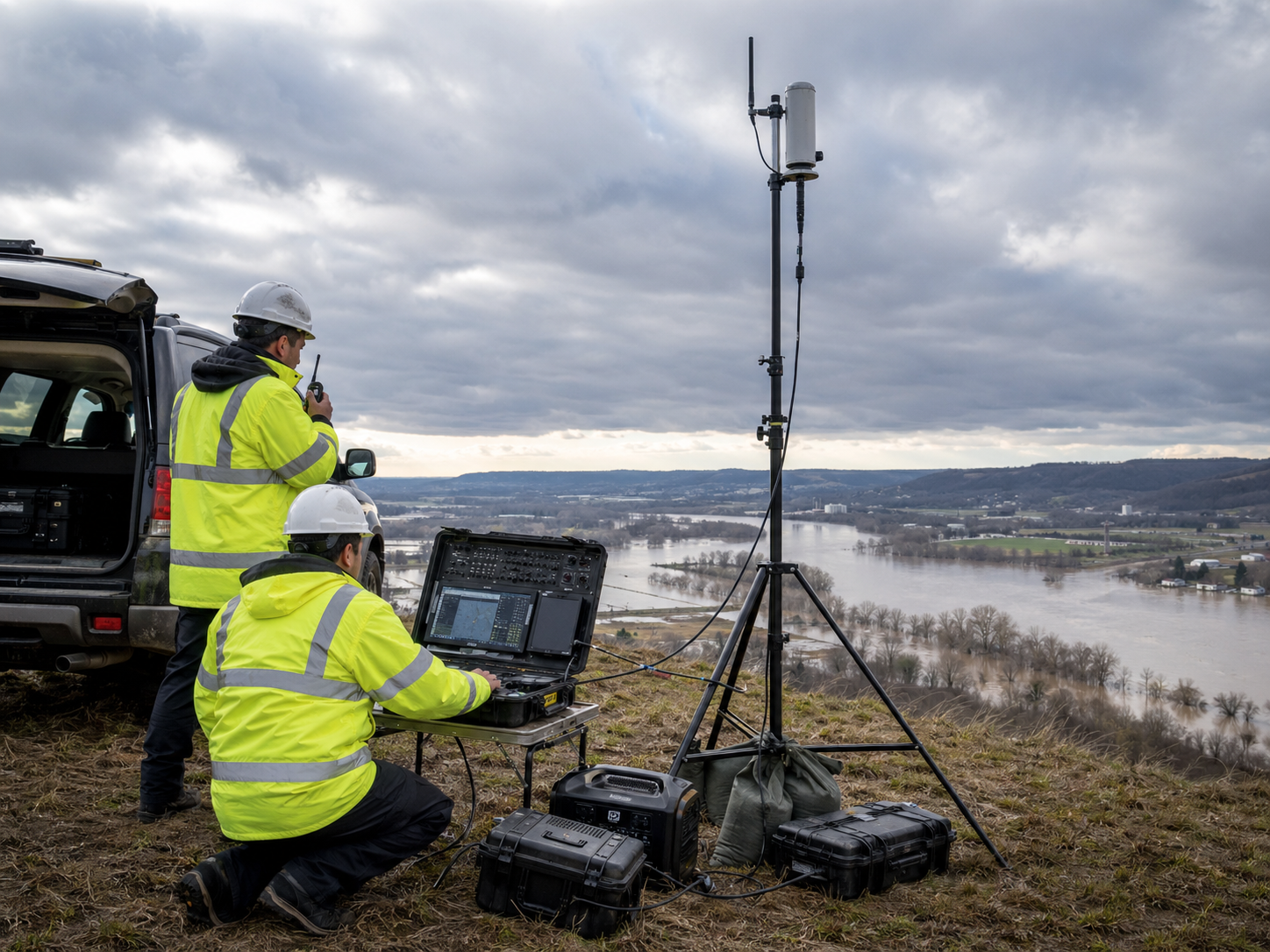
If a flood-control point falls outside fixed coverage, a field terminal placed at elevation can be used as a temporary communication extension point.
The NDMR system uses cascaded narrowband self-organizing multi-hop communication without relying on external wired infrastructure.
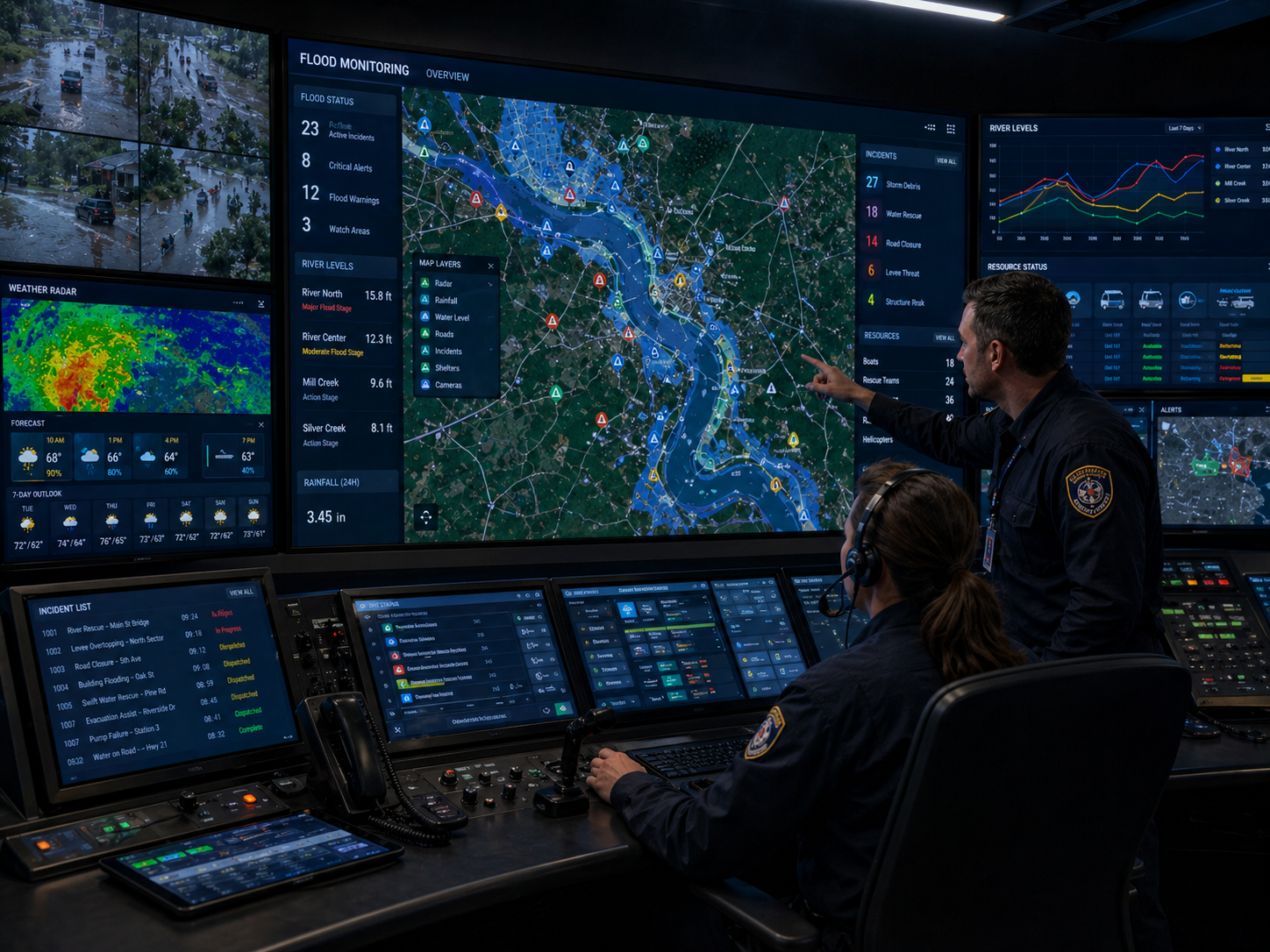
The platform supports positioning, trajectory playback, call control, monitoring, group calls, broadcast and recording retrieval for command centers.
The system links fixed riverbank base stations, field terminals and dispatch-side control into one resilient emergency communication workflow.
The original proposal contains detailed specifications. The table below extracts several representative points for a clearer public-facing case presentation.
| Module | Representative Feature | Public-facing Description |
|---|---|---|
| Emergency Base Station | Solar-powered deployment | Supports solar power and backup battery operation, designed for stable work after disaster events. |
| Emergency Base Station | RTK monitoring | Supports structural monitoring such as pole movement, subsidence and tilt alarm reporting. |
| Handheld Terminal | 30-level cascading | Supports self-organizing cascading communication and seamless interworking with fixed stations. |
| Handheld Terminal | 4800mAh battery | Portable field terminal designed for outdoor use, rapid startup and practical emergency deployment. |
| Multi-mode Terminal | Dual communication logic | Supports self-organizing communication plus 4G integration for broader interconnection possibilities. |
| Dispatch Platform | Location & trajectory | Supports location display, trajectory playback and visual dispatch information for command-side decision making. |
| Dispatch Platform | Call management | Supports single call, group call, broadcast, priority call, emergency call, monitoring and forced interruption or entry. |
| System Expansion | Public / satellite backup | Can use 4G LTE or satellite communication as backup when pure wireless link distance becomes insufficient. |
If your project involves flood control, remote-area communication, outage resilience, large-area patrol or rapid emergency deployment, we can help match a more suitable communication structure.
Continue browsing related pages, or go directly to the inquiry page to discuss your project.